
At ITB Asia 2025, held from 15 to 17 October 2025 in Singapore, Almaty emerged as one of the most talked-about participants among more than 1,500 exhibitors and 20,000 tourism professionals from across the world. Representing Kazakhstan as part of the official delegation, the city unveiled its multifaceted identity — one where ancient traditions harmoniously coexist with modern urban life, and where the awe-inspiring landscapes of the Great Steppe meet an ever-evolving spirit of creativity and strength.
The Almaty stand quickly became a magnet for visitors at the exhibition. Conceptualised as a meeting point of the past and future, it invited guests to experience the city through sight, sound, and story. Through immersive virtual reality, visitors were transported from the bustling halls of Marina Bay Sands to Kazakhstan’s dramatic terrain, from the snow-capped Tien Shan Mountains and emerald valleys to mirror-like alpine lakes shimmering under a clear blue sky. It was a sensory voyage that offered a glimpse of nature at its purest and most majestic.
Yet it was the presence of the Kazakh batyrs — the legendary warriors of the steppe — that truly captivated audiences. Dressed in meticulously crafted armour inspired by historical prototypes, these modern embodiments of Kazakhstan’s proud past brought history vividly to life. Visitors queued to take photos, touch the engraved shields, and ask questions about their cultural significance. For many, especially those from fast-paced, technology-driven Asian cities, encountering living warriors was a striking contrast — a reminder of honour, bravery, and heritage in an increasingly digital age.
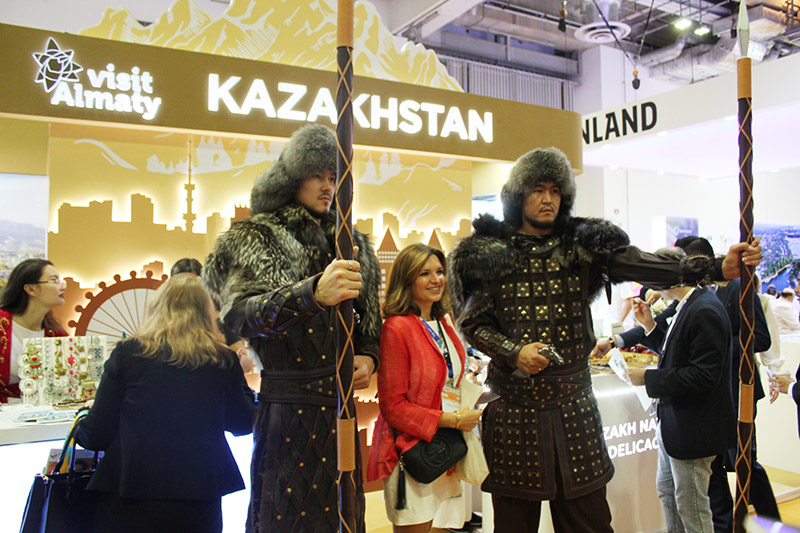
The batyrs became more than an exhibition attraction; they were the living soul of Almaty’s presentation. Around them gathered crowds of people — some filming videos, others listening to explanations about Kazakh culture, and many simply admiring the intricate details of their armour. The moment transcended the boundaries of performance and became a genuine cultural exchange: a meeting between East and Steppe, between modernity and myth.
Complementing this vivid tableau was the music of the Sazgen Sazy ensemble, whose hauntingly beautiful melodies on the dombra and kobyz filled the air with the rhythms of the steppe. The performance evoked a sense of timelessness, carrying listeners back to the roots of Kazakh culture while connecting it to the present day.
Adding colour and craftsmanship to the showcase were artisans Zhadyra Edrekova of EthnoStreet and Saltanat Orisbay of Dilan Show. Through live demonstrations, they transformed the stand into an interactive studio of creativity, weaving the past into the present. Their jewellery and textiles, inspired by centuries-old motifs, reflected the artistic richness and intricate beauty that have long defined Almaty’s cultural identity.
No Kazakh experience would be complete without a taste of its generous hospitality. At the gastronomic corner, visitors sampled baursaks, chak-chak, kazy, dried fruits, and traditional sweets — delicacies that spoke of home, warmth, and community. Many guests returned for second helpings, declaring the flavours unforgettable and the experience a delicious revelation of Kazakh culture.
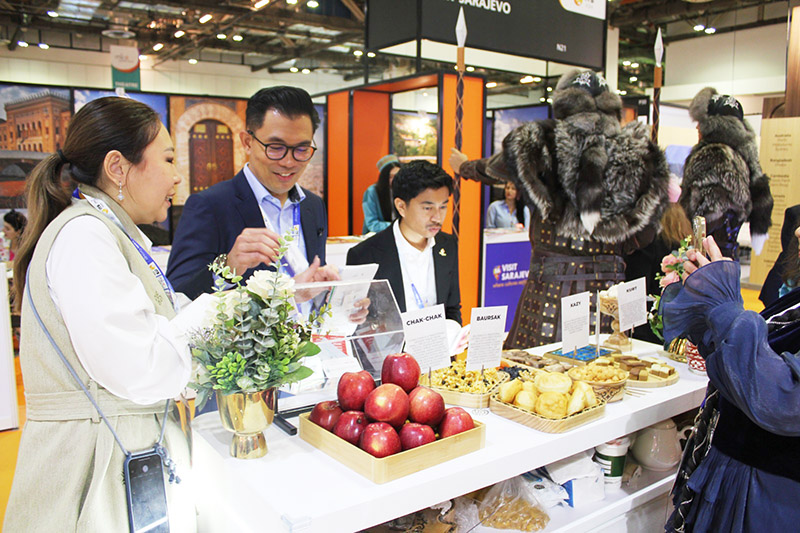
Beyond the captivating cultural showcase, Almaty’s presence at ITB Asia also carried a strong business focus. More than 300 meetings were held with representatives from tour operators, airlines, media outlets, and travel agencies from Singapore, Malaysia, Indonesia, China, South Korea, and Japan. Discussions revolved around joint marketing campaigns, the development of MICE tourism, and the organisation of familiarisation trips to introduce Almaty to a wider Asian audience.

Photo © Steppe Walker | Pexels
Of particular interest was the concept of “Almaty in All Seasons” – an invitation for travellers to experience the city’s year-round appeal. Winter brings a playground for skiers and snow lovers at the surrounding mountain resorts. Spring and summer offer lush hiking trails, eco-tours, and gastronomic adventures that celebrate the region’s natural abundance. Autumn, meanwhile, is marked by cultural festivals, performances, and events that highlight Almaty’s role as a creative and cosmopolitan hub in Central Asia.

Lake Kaindy in Almaty Region, Kazakhstan. Photo © Mohd Atir | Pexels
Following its strong showing at ITB Asia, the Almaty City Tourism Department hosted “Almaty Tourism Day” at M Hotel Singapore City Centre. The event welcomed an audience of travel professionals, airlines, media representatives, and business partners from across Southeast Asia. Guests were treated to live music, craft showcases, virtual reality experiences, and presentations of Almaty’s top tourism products. The occasion further cemented the city’s position as a vibrant, four-season destination where modern comforts coexist with awe-inspiring nature.
The initiative also marked a step forward in strengthening tourism ties between Central Asia and Southeast Asia. It positioned Almaty not merely as a destination, but as a gateway, one that connects cultures, fosters partnerships, and offers travellers something truly distinctive.
Almaty’s participation at ITB Asia 2025 and its subsequent showcase in Singapore underscored the city’s growing confidence on the global tourism stage. It is a city that embodies the spirit of Kazakhstan itself: proud, resilient, and forward-looking. With its blend of history, artistry, and innovation, Almaty left an indelible impression on all who encountered it – a reminder that the heart of Central Asia beats stronger than ever.