If you’re looking to buy a new family car in 2026, you will inevitably be asking if you should go for an electric vehicle or a petrol-powered vehicle. Here’s why I think the All-New Toyota Noah Hybrid hits the sweet spot on things that matter for someone looking to move his or her family.
The Shift to Greener, More Environmentally Sustainable Power
As part of Singapore’s Green Plan 2030 roadmap, the Land Transport Authority has mandated all new cards sold beyond 2030 are “cleaner-energy” models only. This is why since 2025, new diesel cars and taxis are no longer available for registration on our roads. With this move towards cleaner-energy powered vehicles, Singapore residents can look to enjoying cleaner air with less pollution in the future.
Toyota has been perfecting hybrid vehicles for over 25 years. The technology that powered the Toyota Prius, a model that is synonymous with fuel-efficiency and hybrid electric drive, has been continuously improved and refined for over five generations. Toyota’s hybrid know-how, gleaned from their experience with their earliest models, today powers a large family of Toyota models. Toyota Singapore’s current “Power up, Swap Out” campaign encourages Singaporean drivers to test out their fleet of hybrid vehicles, and “fuel” the differences in savings, efficiency and drivability (pun intended). For this, I got to test drive the All-new Noah Hybrid and share my thoughts.

All-new Toyota Noah Hybrid. Photo credit: Justin Teo.
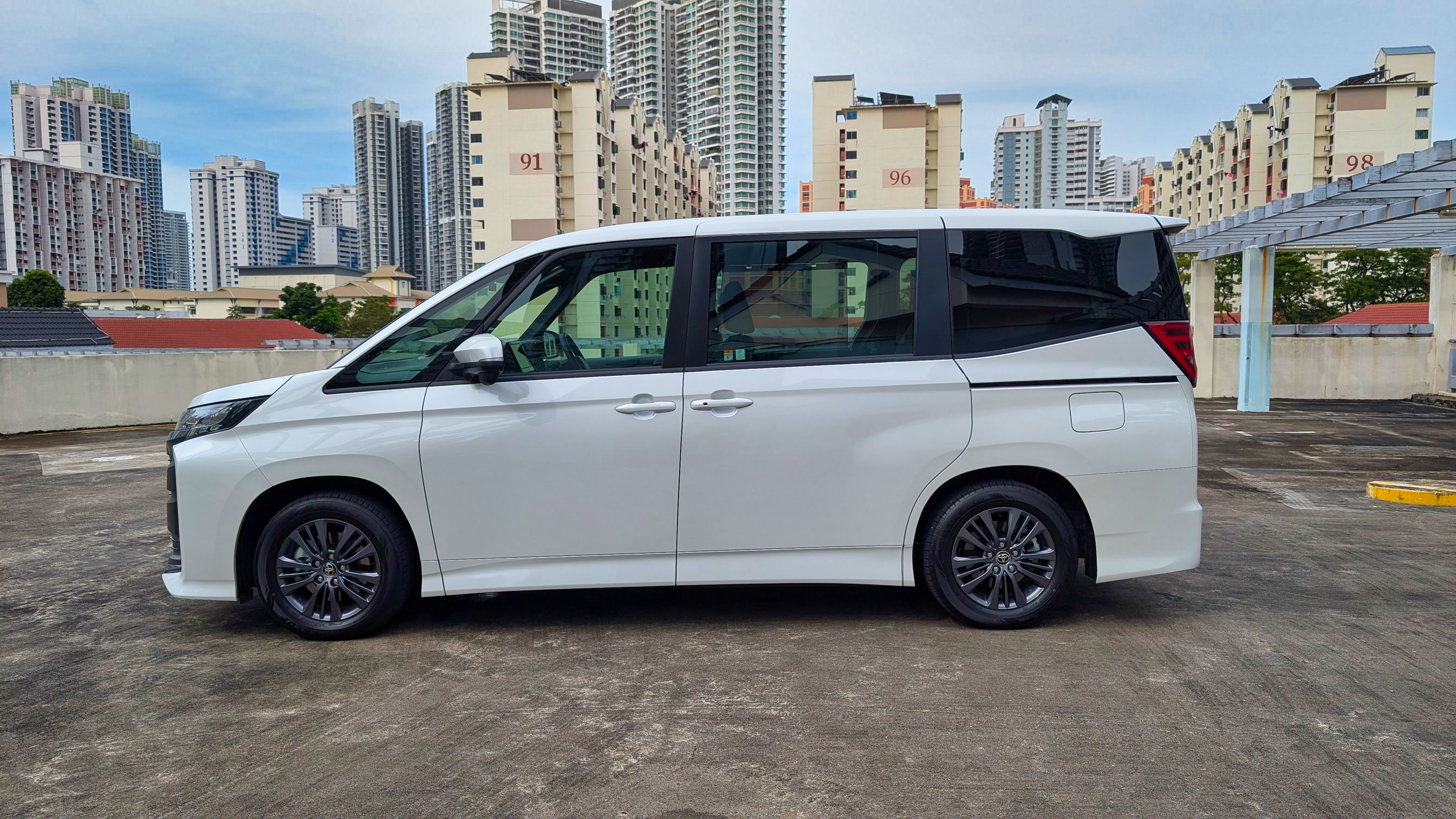
The Toyota Noah Hybrid has a strong presence on the road. Photo credit: Justin Teo.
The All-New Noah Hybrid
Before the fourth-generation Noah was made available by Borneo Motors in September 2025, local parallel importers had already brought in earlier versions since 2017. Private hire vehicle drivers enjoy its fuel-efficiency, and passengers laud its spacious comfort. Now, buyers can enjoy the dependability and aftersales support of the Authorised Dealer with the All-New Noah Hybrid.
The fourth-generation Noah shares its new modular chassis platform with other models, such as the Toyota Prius, C-HR, Corolla and Corolla Cross. The Toyota New Global Architecture (TNGA) platform was developed to streamline production chasses across the large number of models globally.
Exterior
The latest iteration of Noah replaces the “N” logo seen on earlier models with the better-known tri-ellipses Toyota badge. The bold front-grill continues the design language of the Noah family, and the headlights have been updated to incorporate the more streamlined and aggressive “slanty” angled look seen across Toyota’s current fleet.
The side silhouette shares similar assertive lines with its bigger brethren, the Alphard and Vellfire, especially when seen from the rear quarter view. The signature boxiness of these models give strong presence on the road. To the untrained eye, the Noah might easily be mistaken for the higher-end Alphard or Vellfire models.
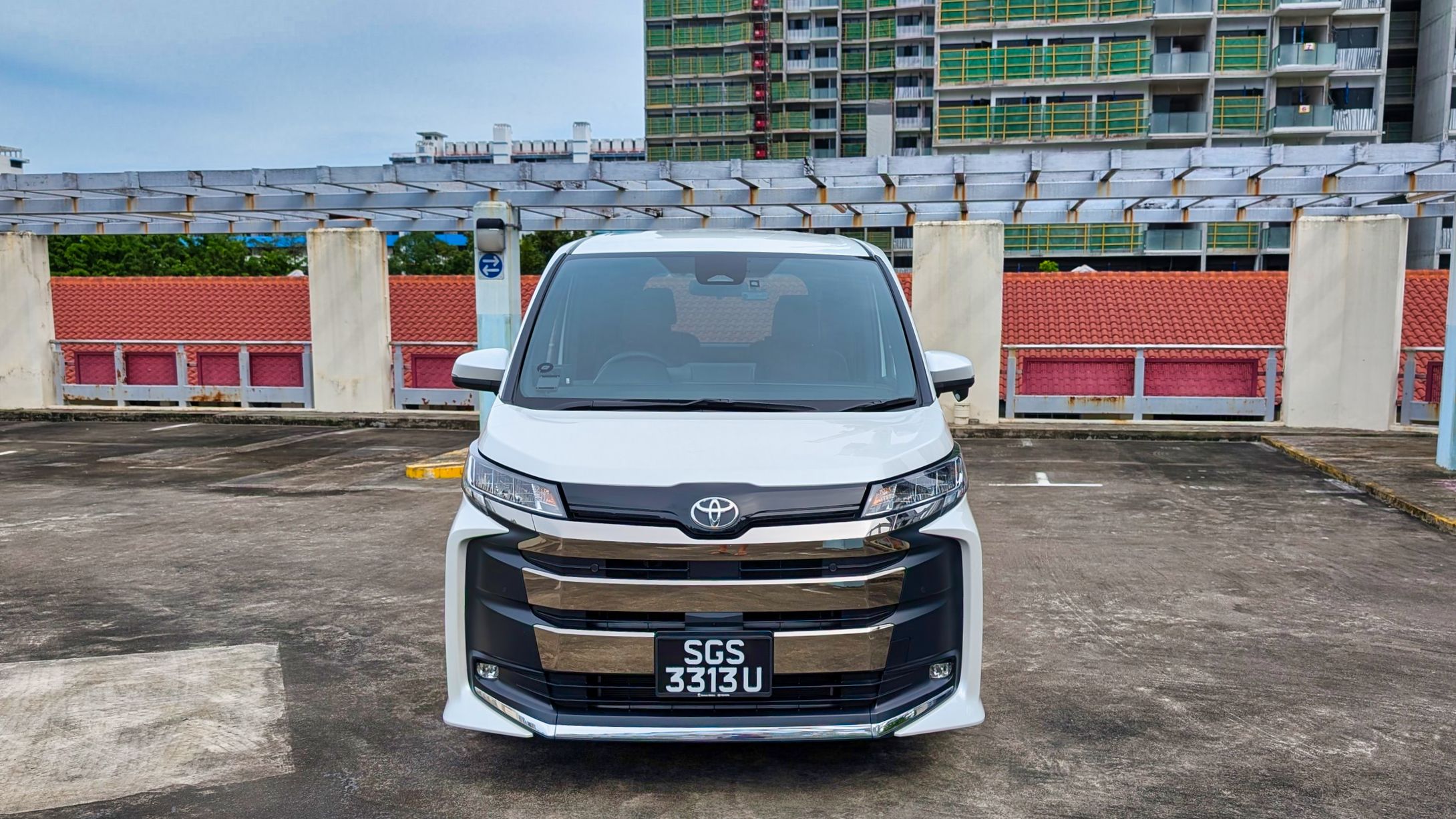
The All-new Toyota Noah Hybrid. Photo credit: Justin Teo.
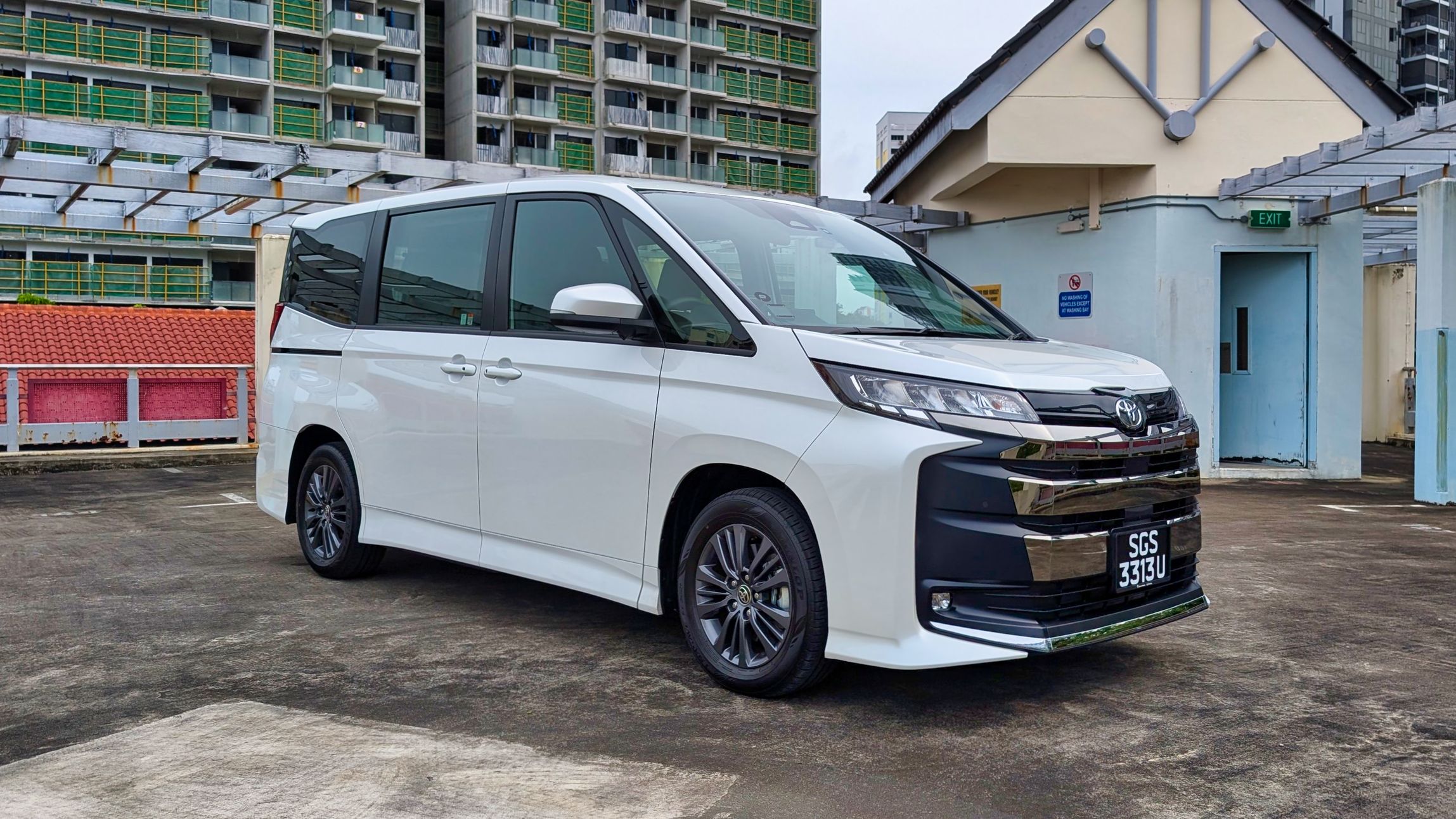
The All-new Toyota Noah Hyrid. Photo credit: Justin Teo.
Interior
For the Noah’s interior, you can have any interior colour you want, as long as it is in black. Joke aside, the Noah’s leather interior is optimised for simplicity and maintainability. The anodyne interior is unlikely to offend anyone’s taste, and the true value-preposition is less about how it looks, but more about how it makes passengers feel – the Noah has oodles of space that rivals its bigger siblings, and the seat configuration truly maximises the possibilities for this car.
The 2-2-3 configuration sacrifices one additional seat in the second row, in exchange for comfort and practicality of the two captain seats. I think this is better than the 2-3-2 configuration, since it allows for the most comfort for the second-row passengers. The seats in the third row can be folded up and away individually to free up extra boot space. For the prodigiously tall, the second-row seats slide on rails to move quite a way back for that extra bit of luxurious leg space.
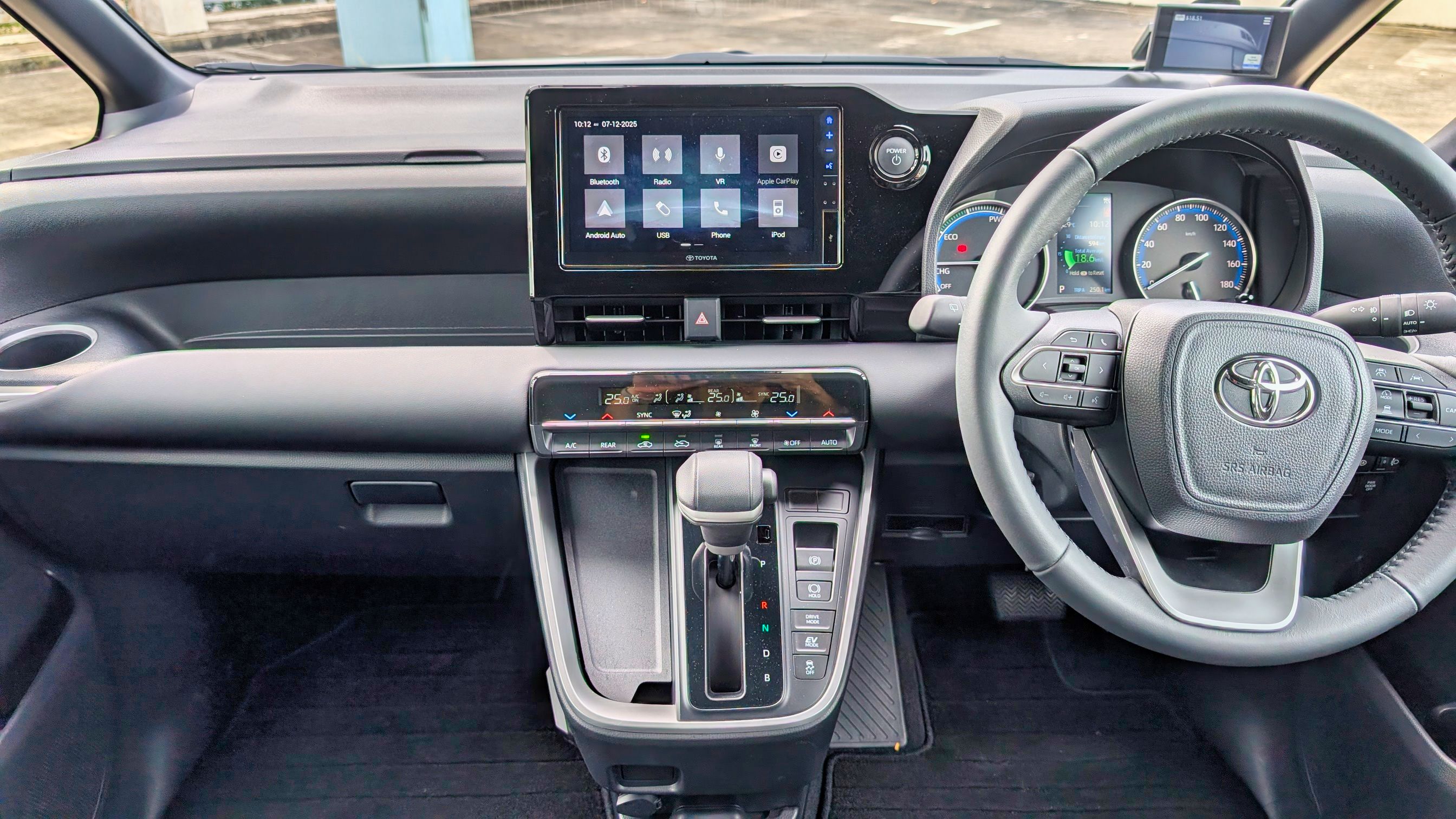
The cockpit of the All-new Toyota Noah Hybrid. Simple and functional. Photo credit: Justin Teo.
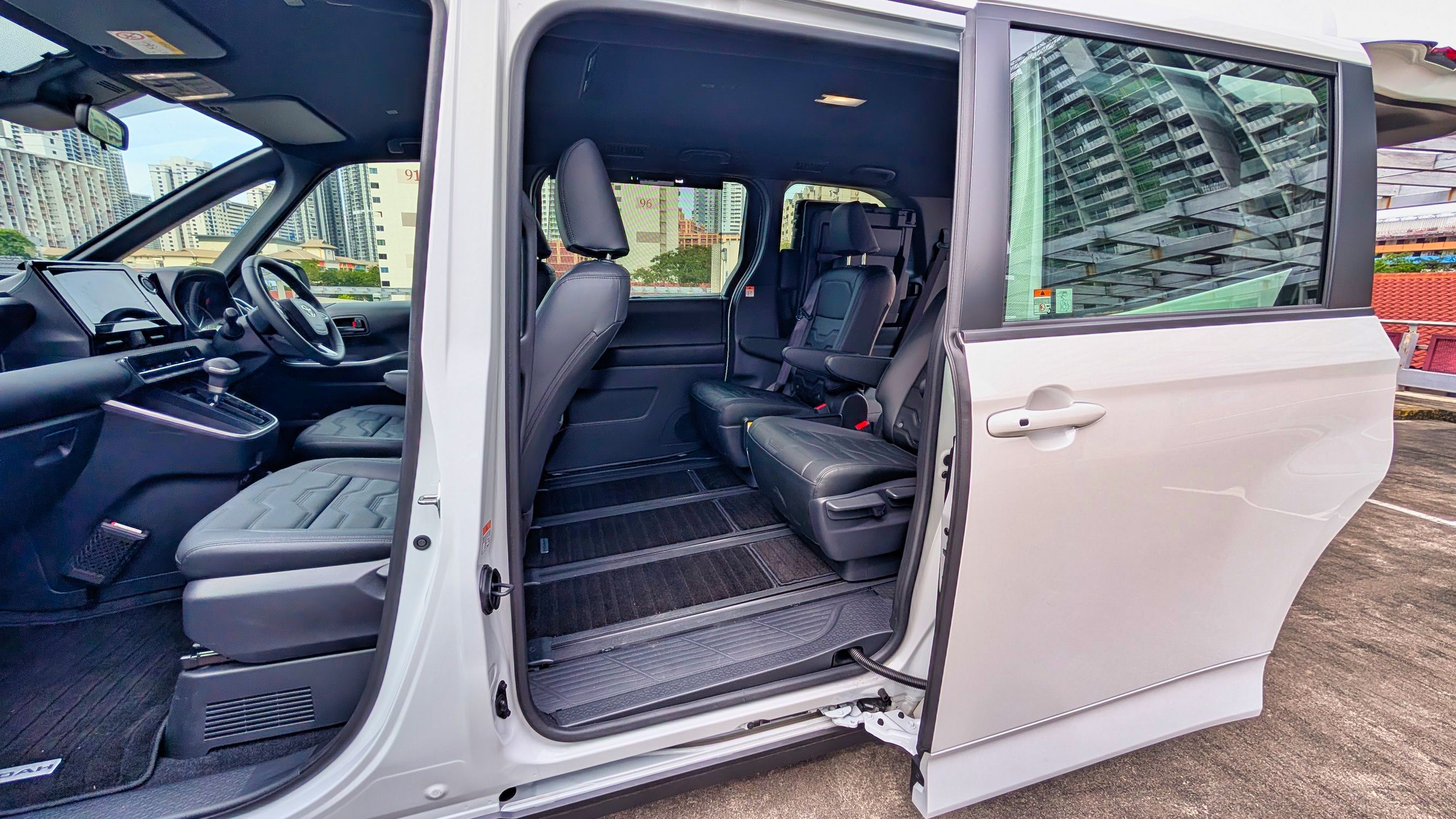
With the third-row seat folded up, and the captain seats fully push back, the second-row passengers on the all-new Toyota Noah Hybrid enjoy luxurious legroom. Photo credit: Justin Teo.
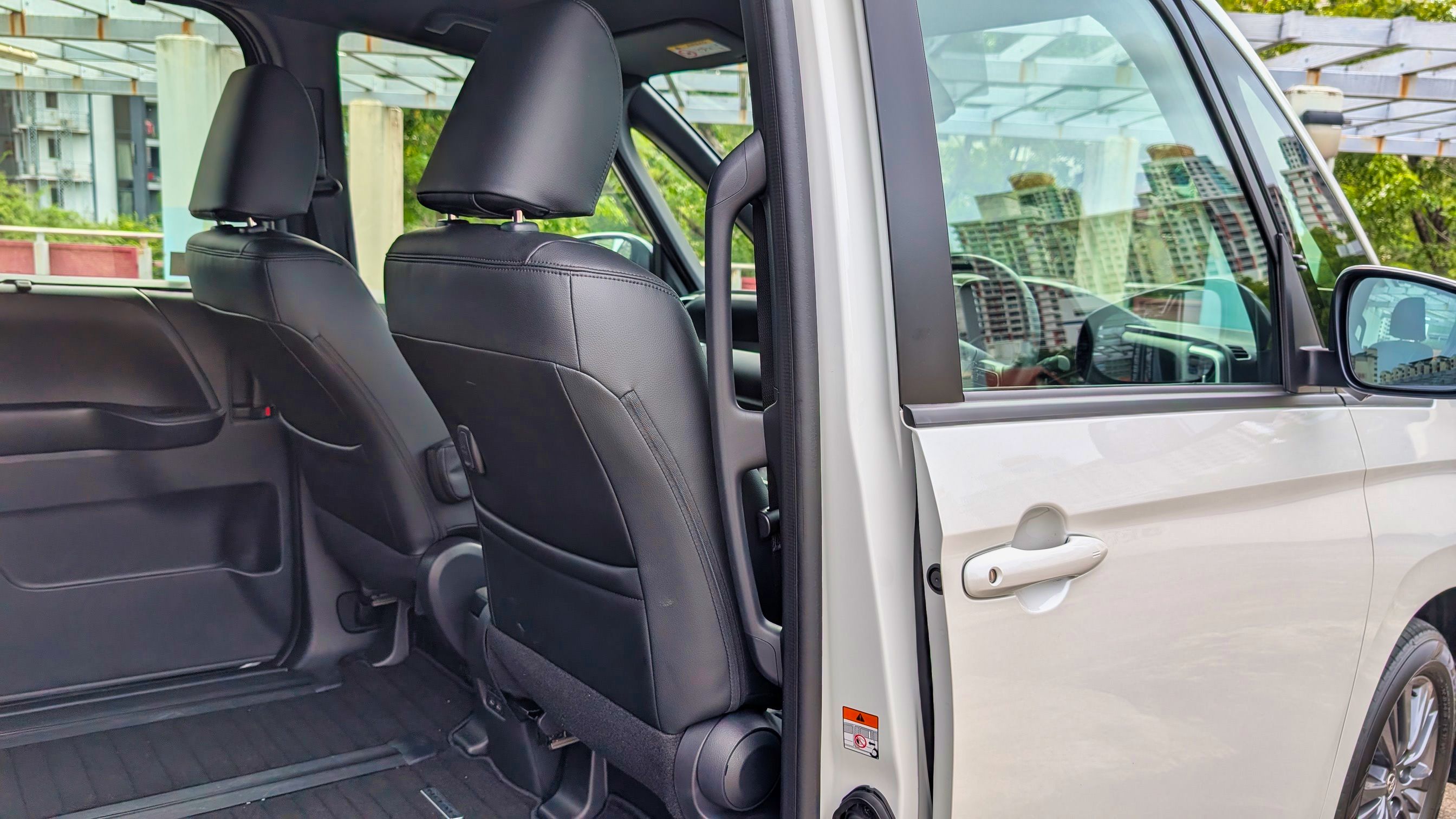
Toyota Noah Hybrid: The side handles on the B-pillars are excellent aid for older passengers. Photo credit: Justin Teo.
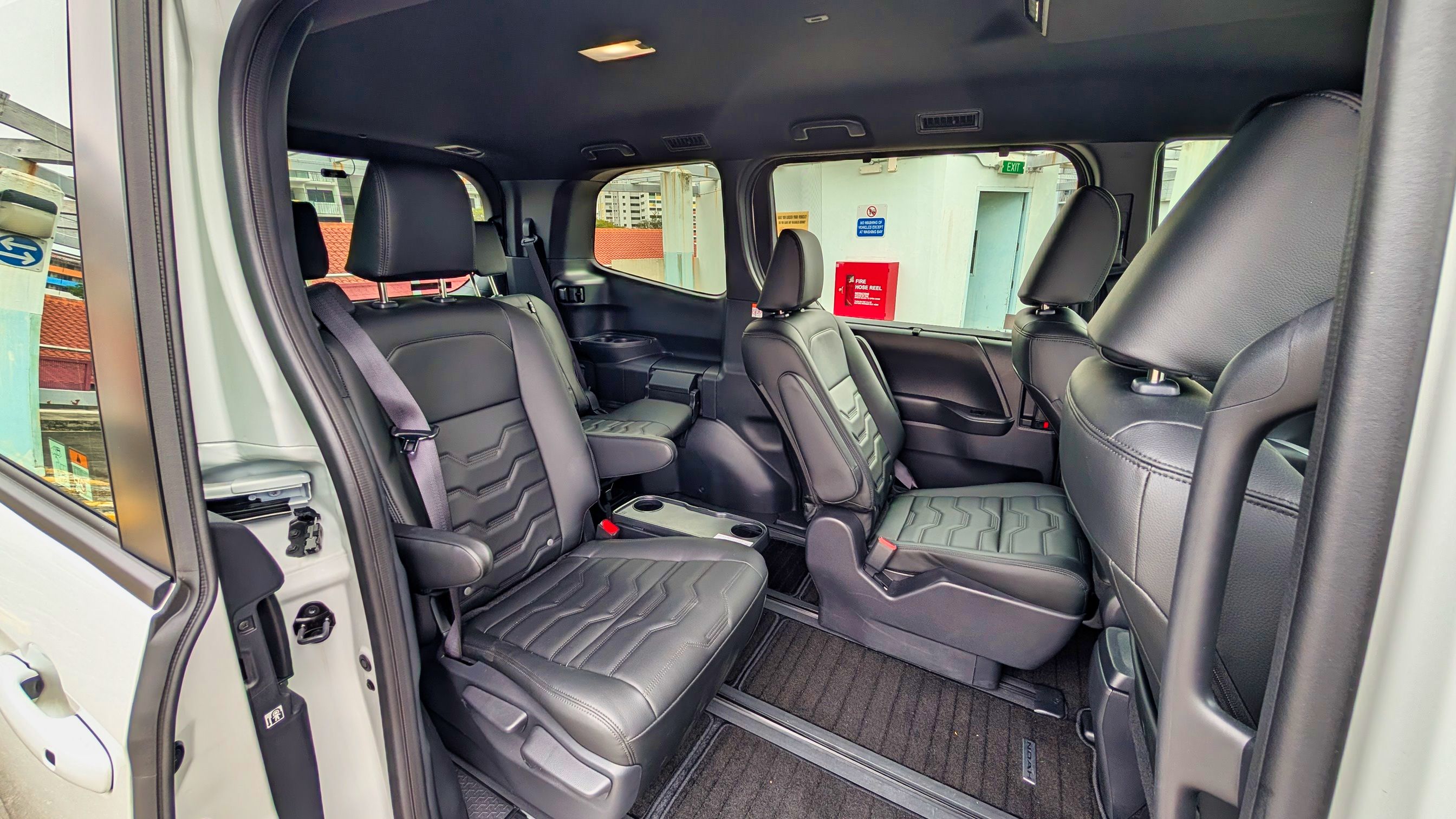
Second row captain seats can slide forward and backward on rails for different configurations. Photo credit: Justin Teo.
I tested the leg clearance with my exceptionally average Singaporean male height of 1.73 meters, using my seating positions on all three rows, and I am happy to report that the third-row caters to regular-sized non-hobbits too.
Ingress and egress for the passengers are facilitated by powered sliding doors on both sides. That’s right, the powered sliding door is no longer limited to just the curb-side. The Noah has been generously upgraded to have powered sliding door on the starboard side too, so that passengers no longer need to plot or fight to take the limp-wristed port-side captain seat. These doors can be actuated by a quick tug on the door handles, or from the driver’s cockpit. If both hands are occupied or disabled, or if you fancy doing a little one-legged shimmy for public entertainment, the Noah also boasts the latest door opening trick in contemporary vehicles – the kick sensors on the sides open the sliding doors.
In my experience, it would take the exceptionally average Singaporean male more than a weekend to master the one-legged shimmy to open the door – I typically needed two tries before I use my hand to actuate the sliding door.
Second-row passenger comfort is assured through the use of two USB-C charging ports on the central console, which should keep passengers properly distracted. Third-row passengers are unfortunately forced to rely on the goodwill of the more privileged passengers or their own power-banks. Overhead air-condition vents should keep everyone’s head (and bodies) cool during a tropical road trip. If the free window tints are insufficient, the Noah comes with built-in roll-up blinds for additional shade and privacy.
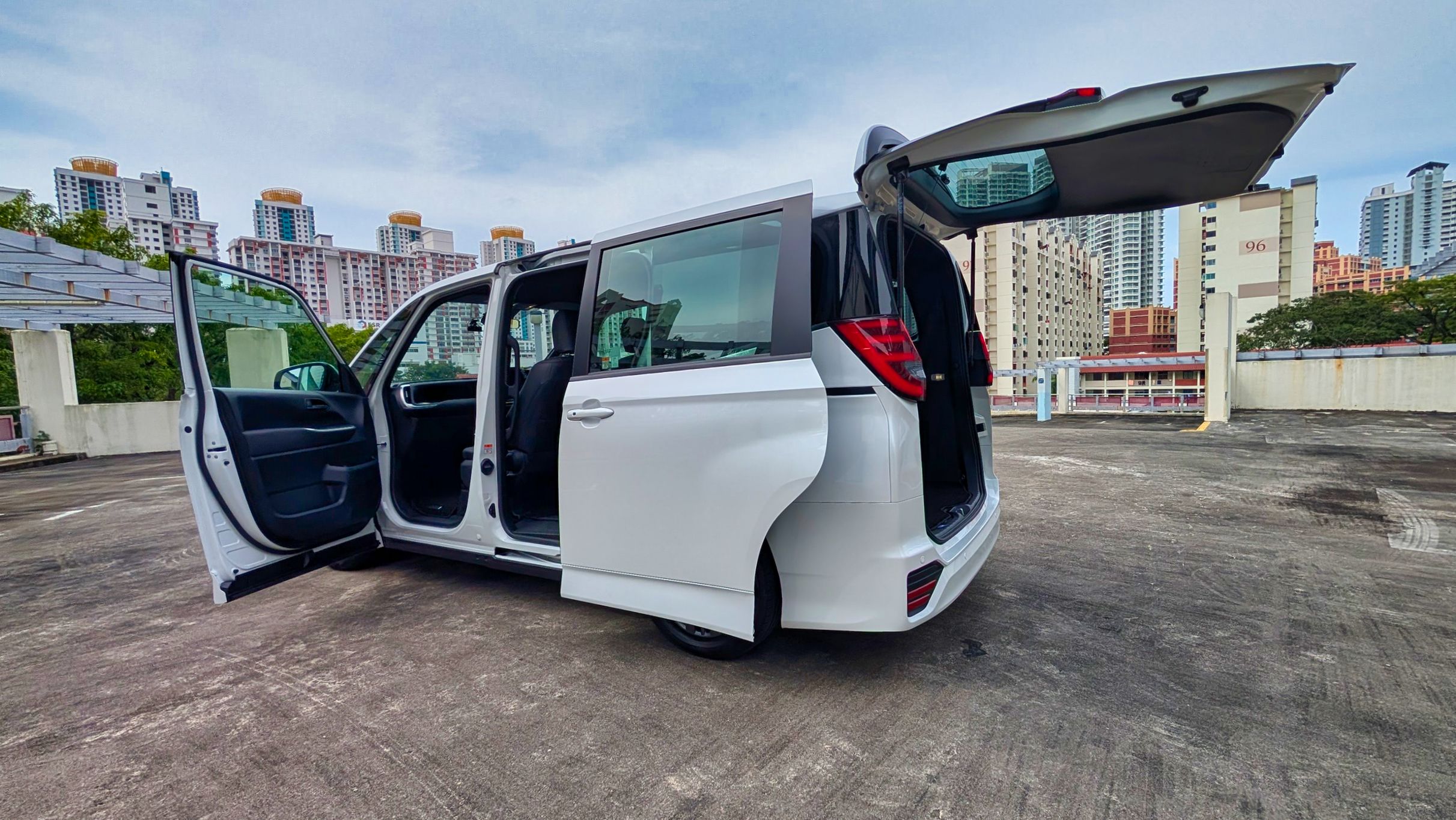
Dual-powered sliding doors for passengers on both the left and right sides. The full height of the boot provides shelter from the rain when loading/unloading operations. Photo credit: Justin Teo.
With the third-row seat folded up, and the captain seats fully push back, the second-row passengers on the all-new Toyota Noah Hybrid enjoy luxurious legroom. Photo credit: Justin Teo.
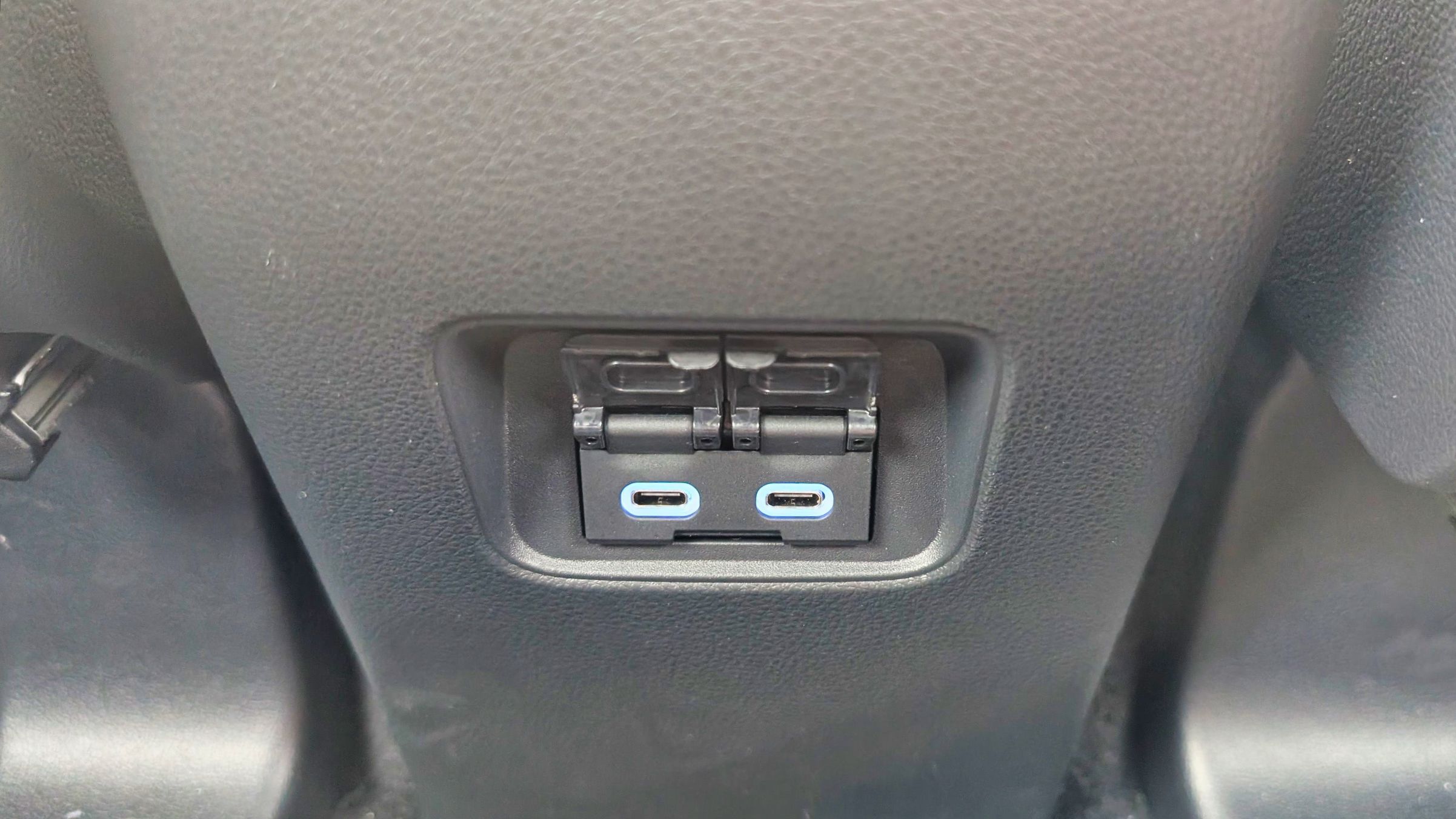
Two USB-C charging ports for the rear passengers on the All-new Toyota Noah Hybrid. Photo credit: Justin Teo.
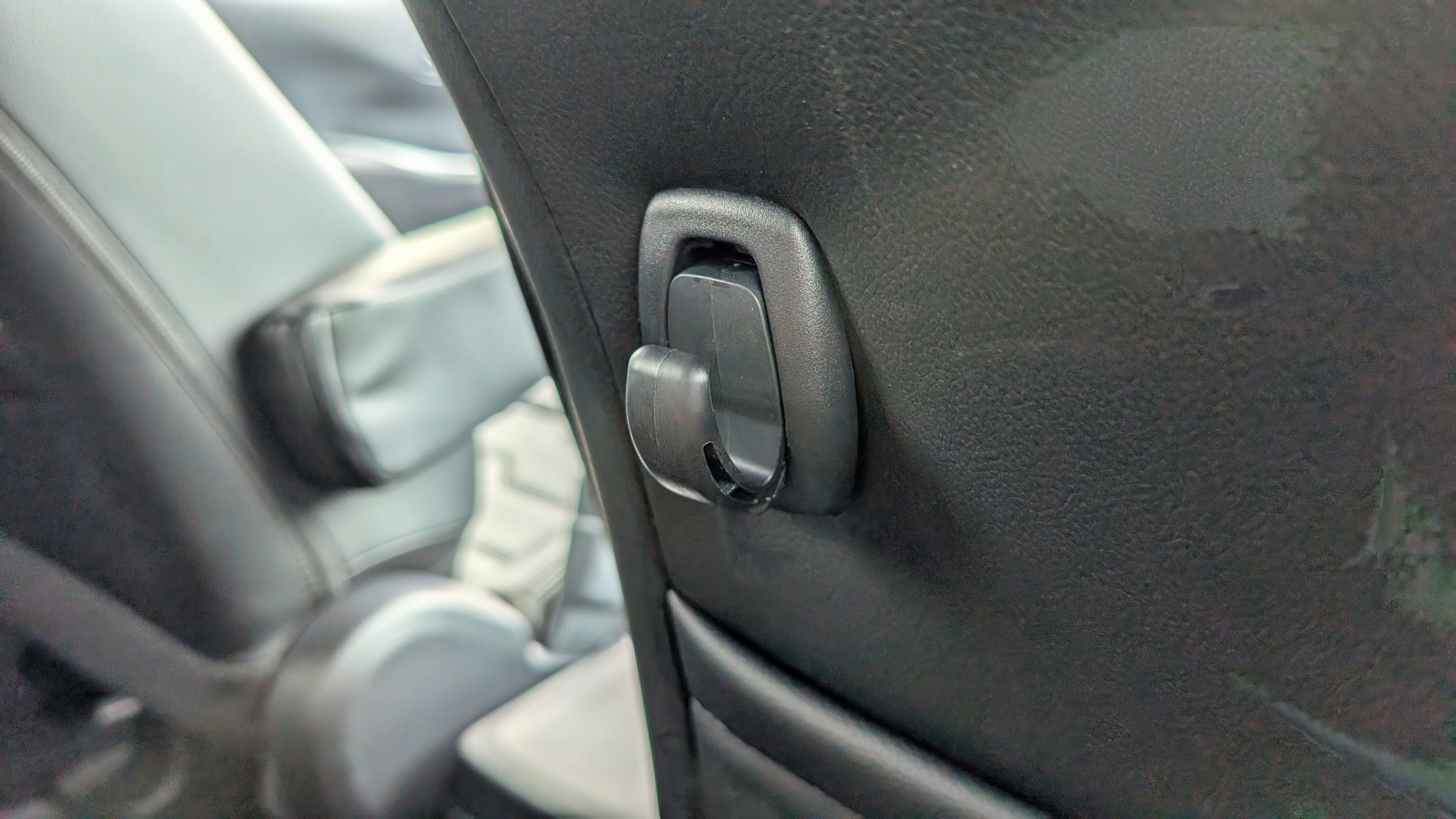
Toyota Noah Hybrid: A bag hook on the driver’s seat, indispensable when packing food home. Photo credit: Justin Teo.
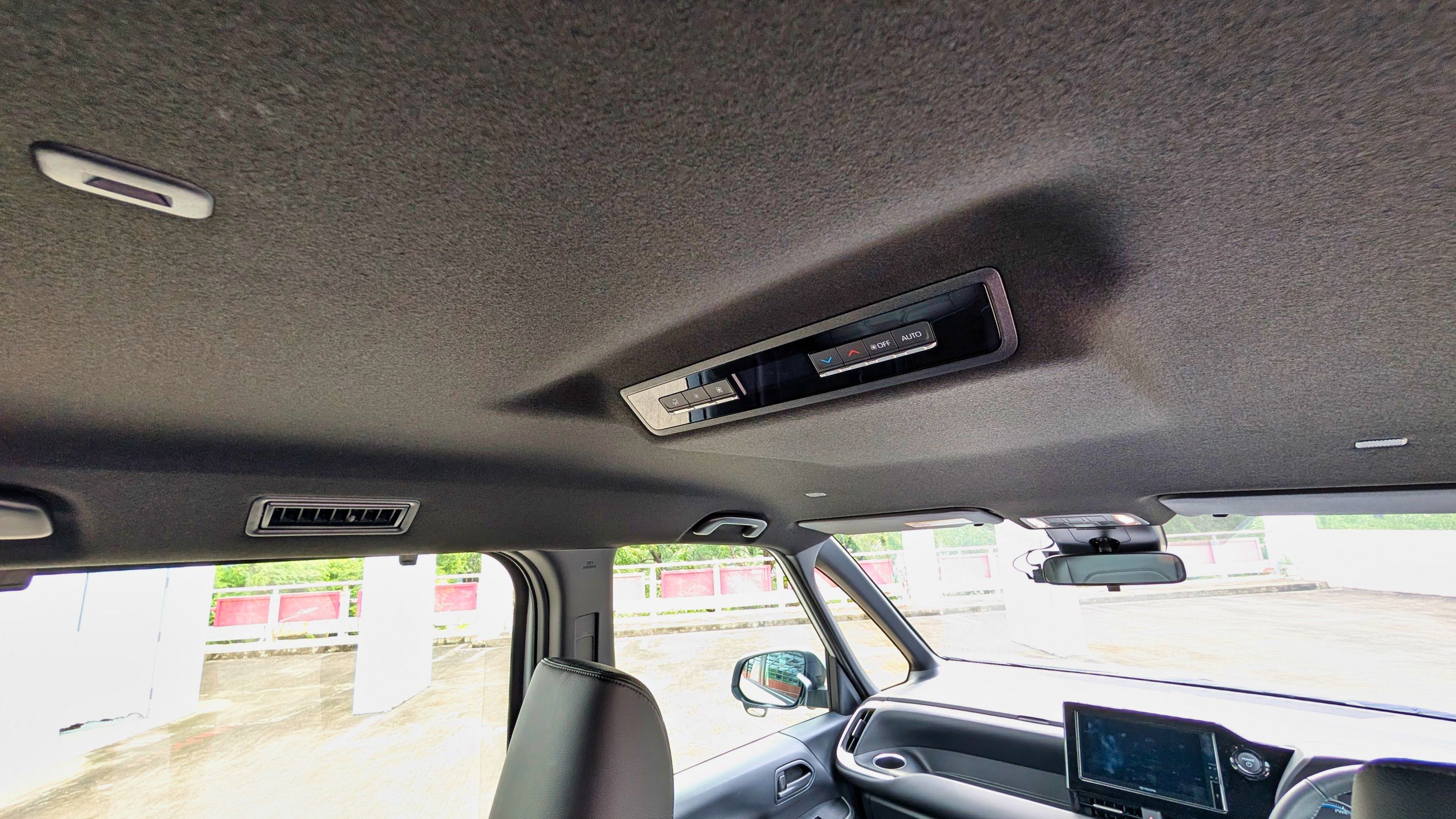
The overhead climate controls for the rear passengers on the All-new Toyota Noah Hybrid. Photo credit: Justin Teo.
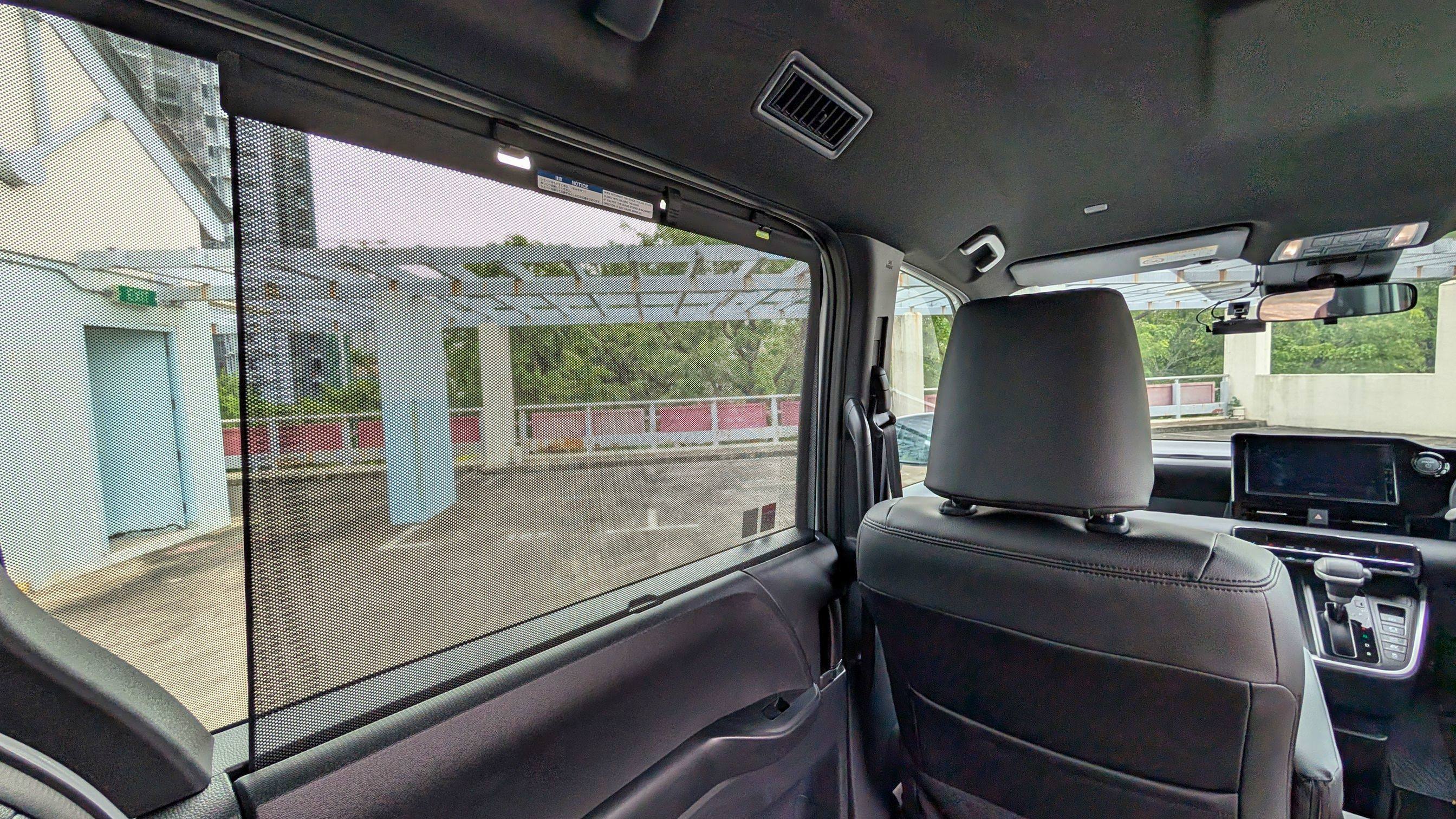
Toyota Noah comes with built-in shades for the rear passengers. Photo credit: Justin Teo.
The Drive
If you’ve made it this far in the article, I doubt you are looking for me to confirm that the Noah drives like it’s on rails, with an acceleration that rivals sports cars – it doesn’t. It drives just as you’d expect a 1.8-litre naturally-aspirated hybrid MPV would, adequately and competently. At take-offs (liberal use of the analogy here), the electric motor with 185 Nm torque moves the Noah off the line quieter than pure combustion engines in its class. The electric motor augment the combustion engine to give a combined 138 hp for the 1640 kg vehicle, a respectable 84 hp per metric ton.
Toyota has been refining the electro-mechanical choreography between electric motor and combustion engine for almost three decades, and this shows in the Noah’s drive experience – the transition is seamless and one would be hard-pressed to tell the difference between a pure combustion and a hybrid drive.
The specifications boast 4.4 litres per 100 km for combined city-highway fuel-efficiency. In a little over two days, I clocked 18.6 km per litre driving around Singapore. Considering the weight and relatively boxy aerodynamic design of the Noah, this was an excellent real-world fuel consumption, since that I was rather heavy-footed in testing the vehicle, and made more short drives than expressway journeys. With the Noah’s 52-litre fuel tank, you can drive the entire length of West Malaysia, from Singapore to north of Penang with fuel to spare in a single tank; There is no range anxiety when it comes to hybrid vehicles.
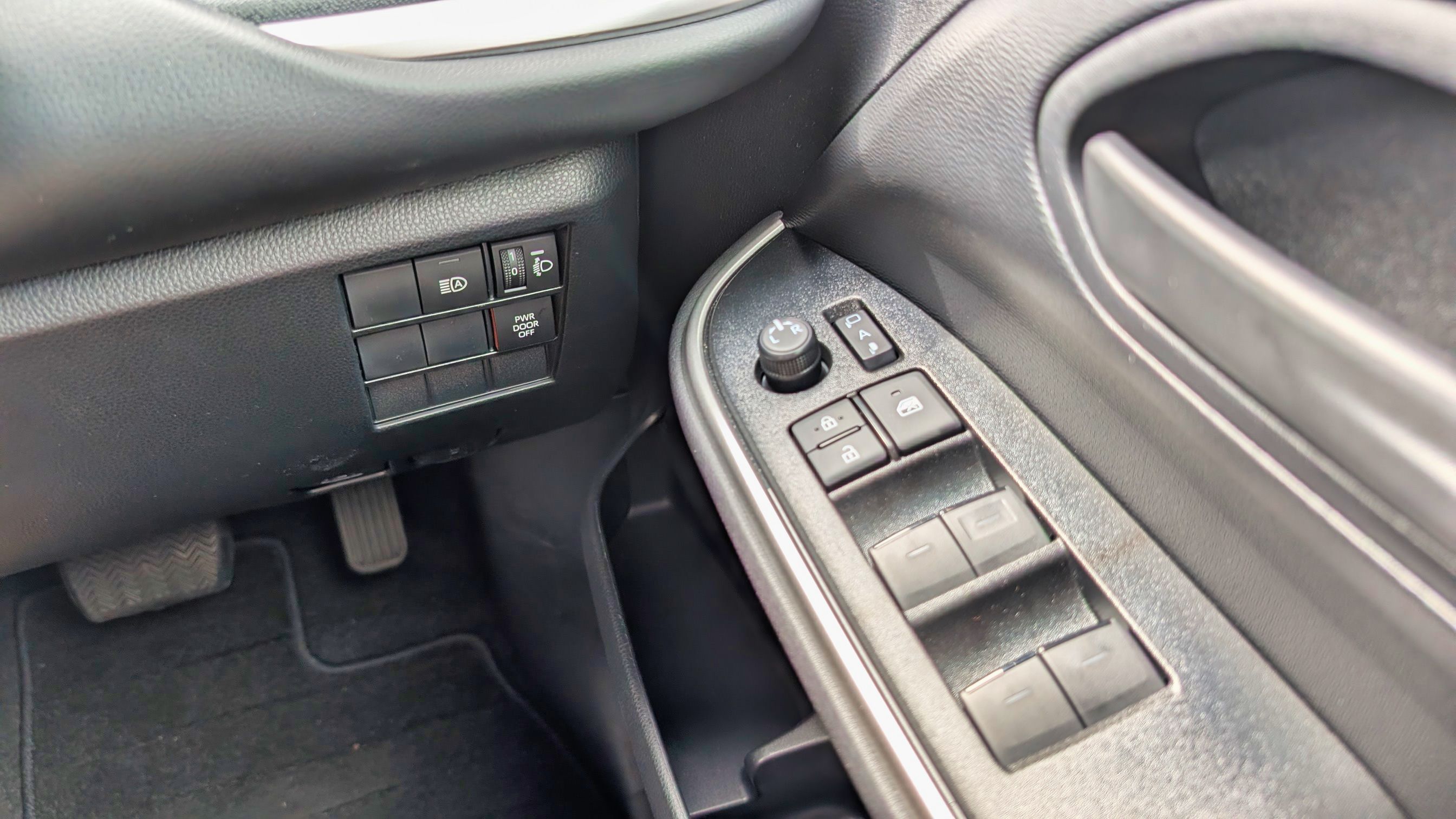
Toyota Noah: Standard controls on the driver’s side door. Photo credit: Justin Teo.
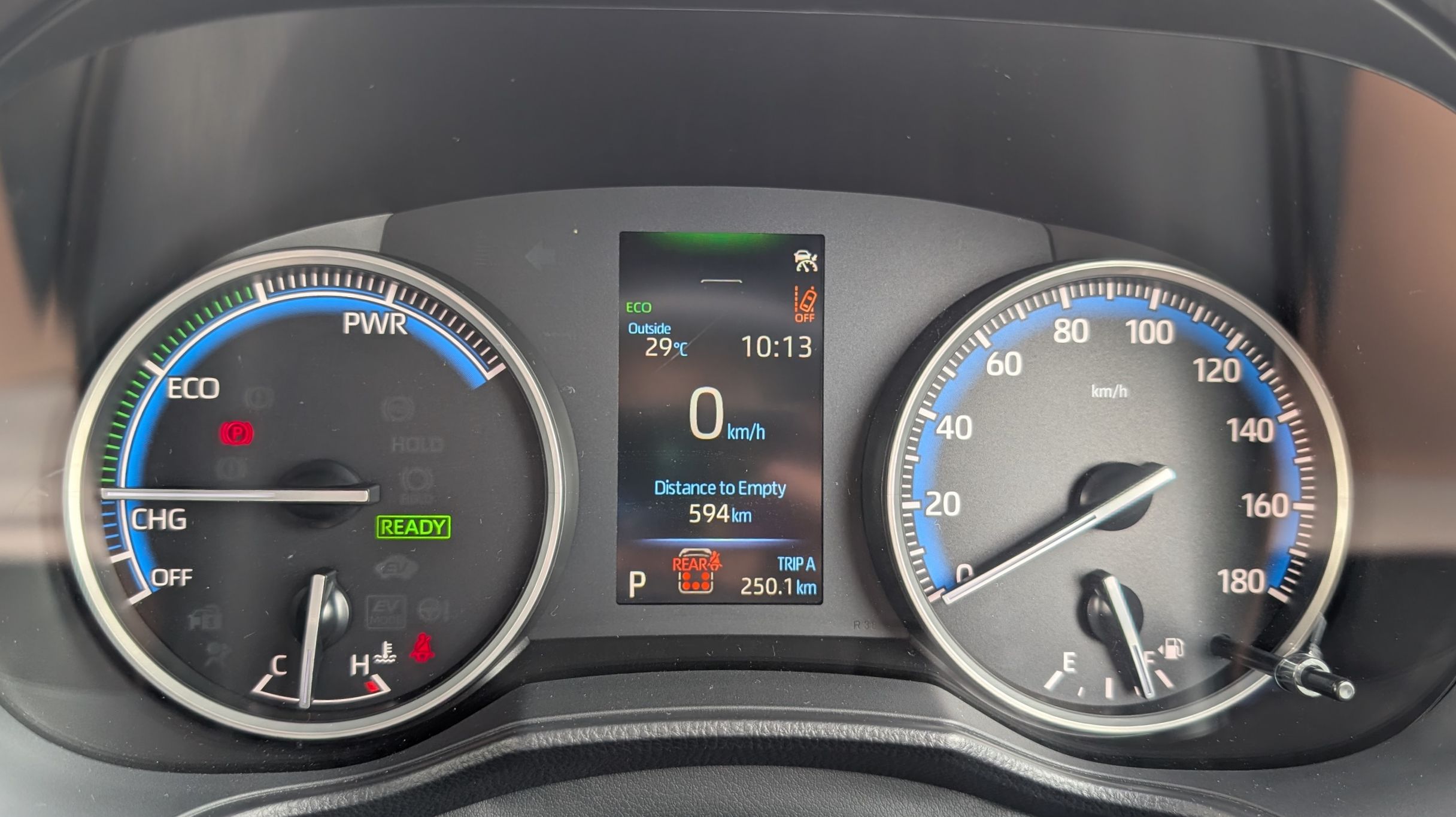
Instrument cluster for the All-new Toyota Noah. Photo credit: Justin Teo
The cockpit of the All-new Toyota Noah Hybrid. Simple and functional. Photo credit: Justin Teo.
Safety is enhanced with the latest Toyota Safety Sense suite. In my short experience with the vehicle, there were several features kept me from wrecking the vehicle before I had to return it; The Blind Spot Monitor alerted me to vehicles that crept up to me and reminded me to stay in my lane unless I want to renew my NCD. Secondly, the Parking Sonar working in tandem with Panoramic View Monitor were invaluable in parking the voluminous car. I can also vouch for the enthusiasm of the Pre-collision System (PCS) in ensuring that I don’t hit anything while parking – it almost gave me a heart-attack when the PCS alarm went off while parking in a tight spot.
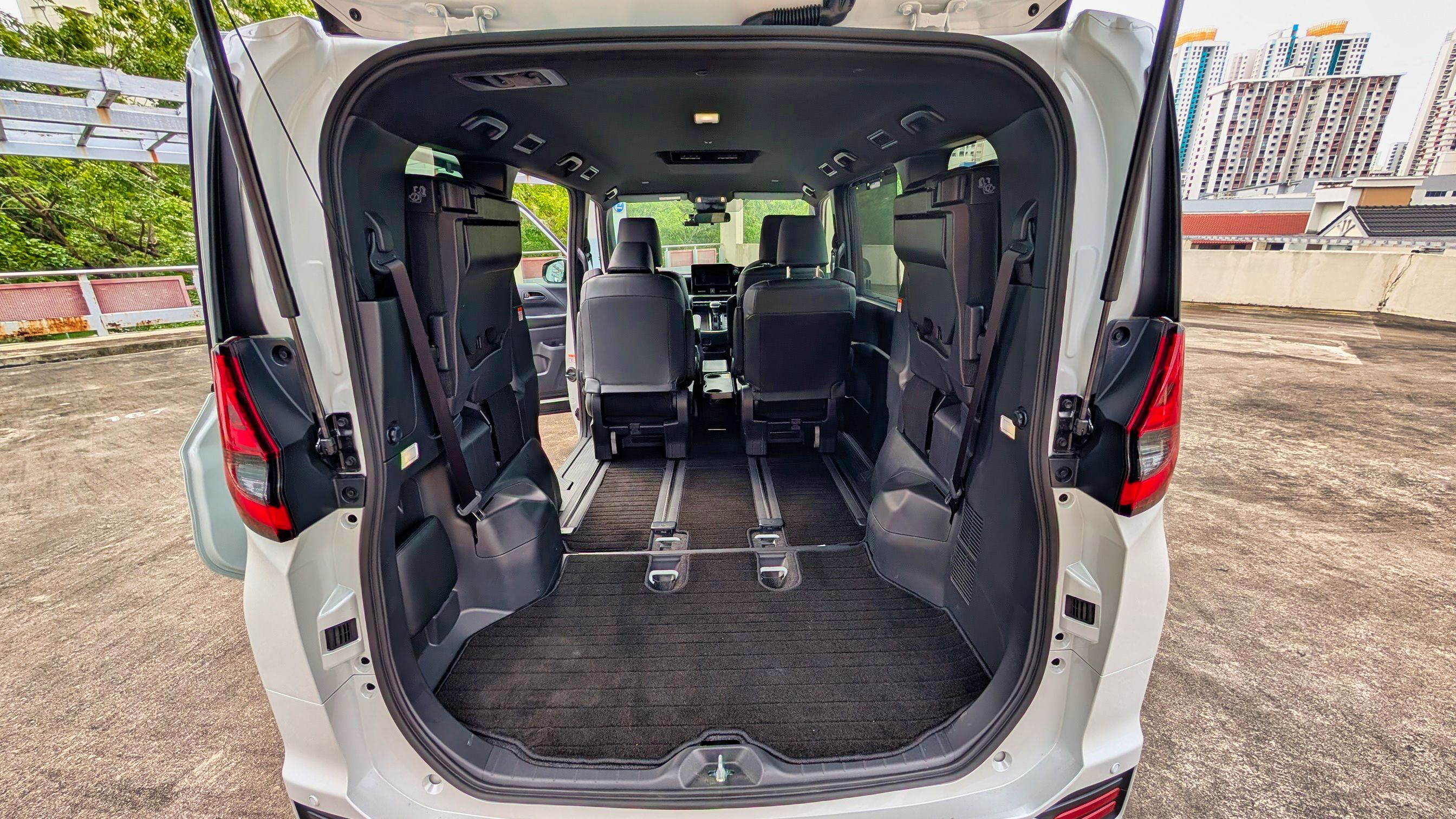
The absolutely cavernous cargo space on the all-new Toyota Noah Hybrid. Second-row seats are pushed to the front. Photo credit: Justin Teo.
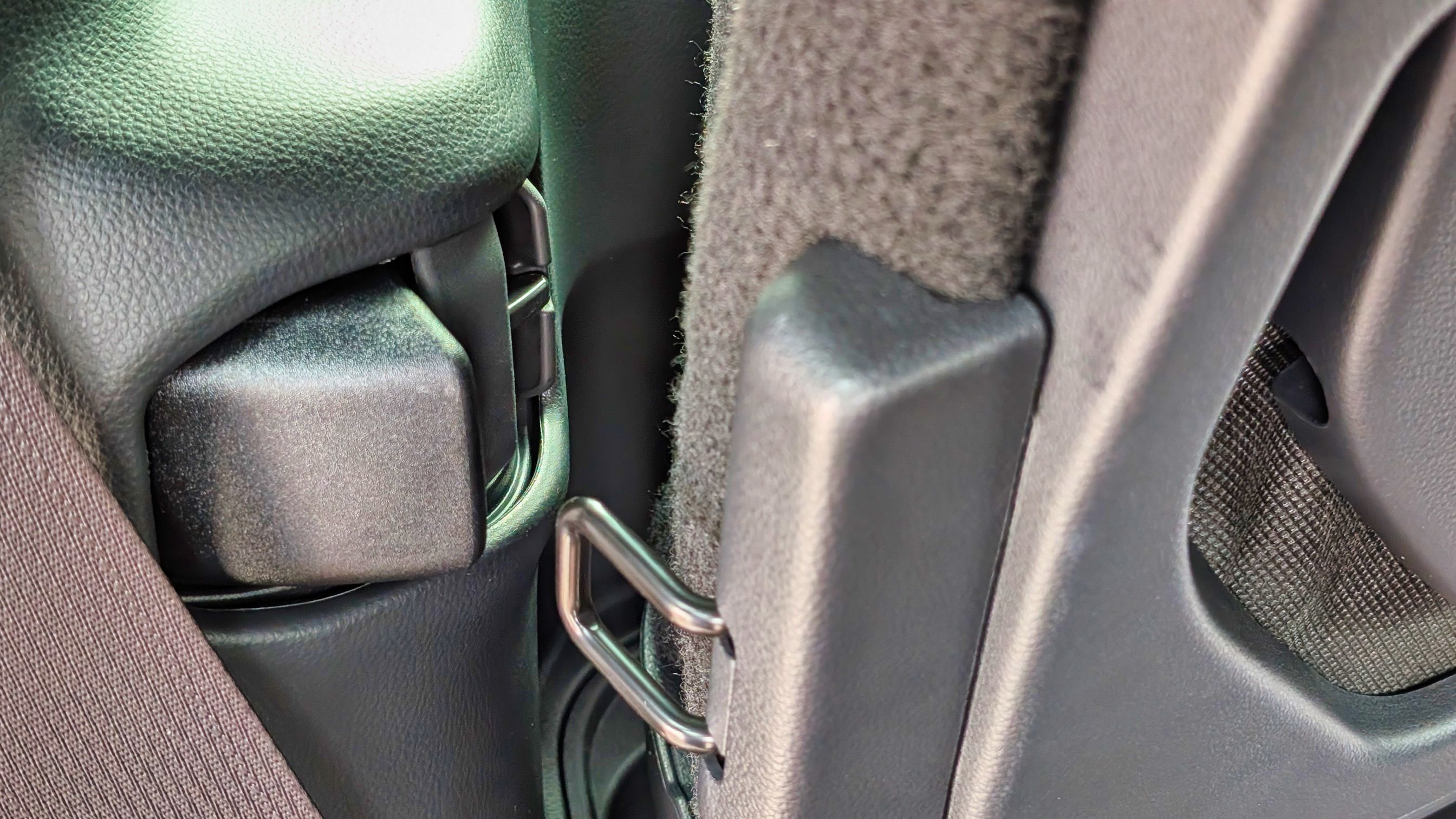
The latch used to stow away the third-row seats, which go up and to the sides. Photo credit: Justin Teo.
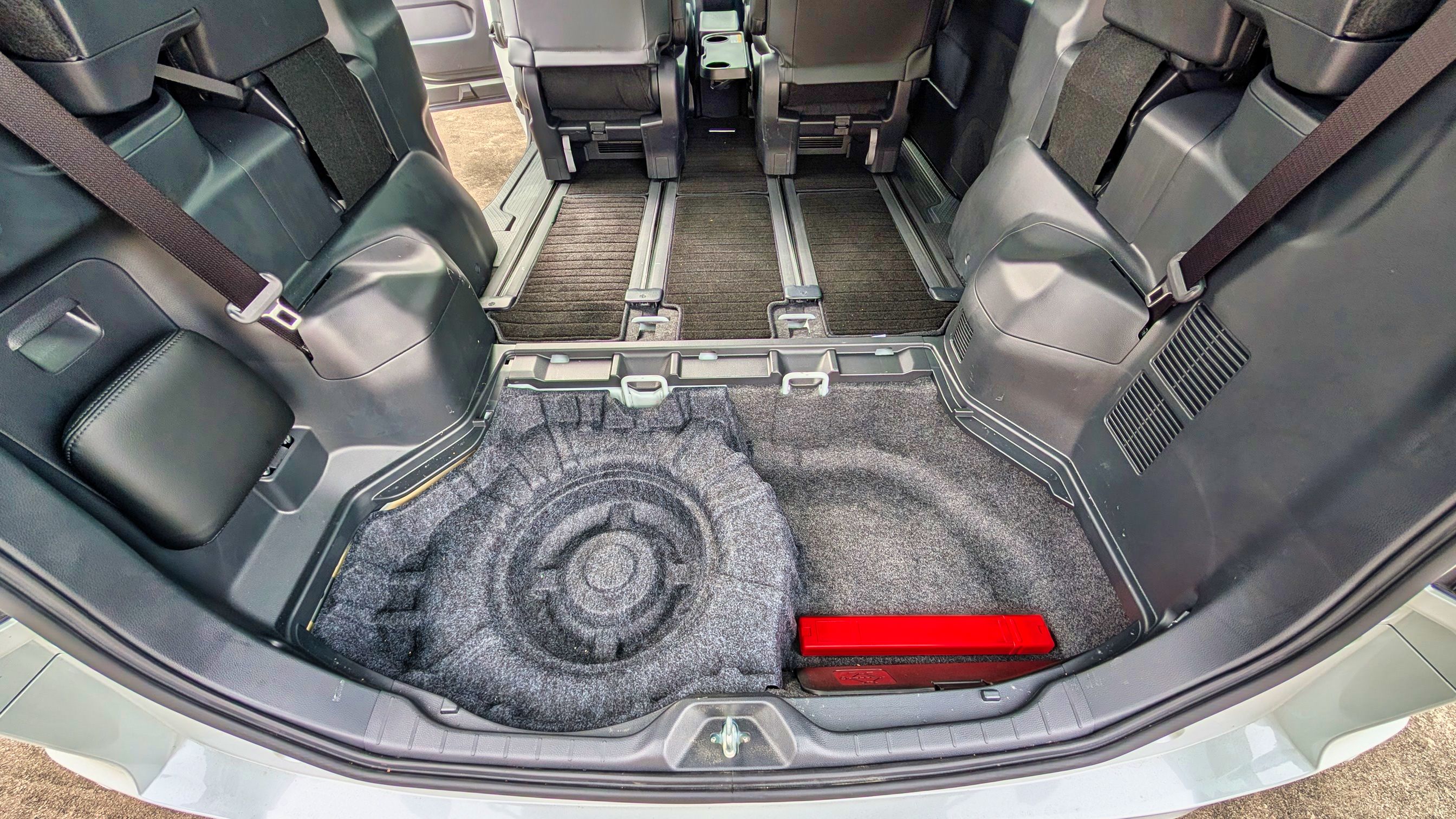
One spare tire hidden beneath the cavernous cargo space on the Toyota Noah Hybrid. The second-row seats are pushed to the front. Photo credit: Justin Teo.
Niggles
The interior is uninspired in the ultra-competitive motor market today. Just a few years ago, the 4.2-inch multi-info display with wireless Apple CarPlay and Android Auto might be sufficient. However, buyers today are spoilt with various bells and whistles, and all sorts of party tricks in the cabin on offer at this price range. Personally, I would have loved the option of having a ventilated driver’s seat – photoshoots for car reviews in the tropical climate can be a sweaty affair.
Another slight omission at this price bracket is the lack of a powered tailgate; Vertically-challenged drivers might have difficulty closing the tailgate without assistance.
The Blind Spot monitoring and parking sonar also seemed a tad intrusive with its incessant beeping, even when the car is stationary at the lights.
Why it hits the sweet spot
Seven-seaters are perfect for the family looking for a new ride that need to cater to pets, kids, helpers and grandparents. In Toyota’s current range of seven-seaters, the Noah sits between the baseline Sienta and the luxurious Alphard. If you are hesitant over full electric vehicles, and pure combustion vehicles seem antiquated, Toyota self-charging hybrids fill that sweet spot in powertrain options.
Family looking for big space, great utility, exceptional range and exceptional fuel-efficiency, reliability and maintainability of a Toyota. The All-new Toyota Noah is equipped with the latest Toyota Safety-Sense suite for that added peace of mind for the family. Finally, if you have resale considerations on your mind.