
Did you know that Malaysian automotive company Proton once owned Lotus Cars? Yes, that high-performance British sports car company known for its razor-sharp handling.
Since its founding in 1983 by then–Deputy Prime Minister of Malaysia, Tun Dr. Mahathir Mohamad, Proton has stayed true to its mission of making car ownership affordable for Malaysians. The company didn’t just assemble cars; it engineered them, elevating Malaysia to become the 11th country in the world capable of designing cars from the ground up.
In 1996, Proton even acquired Lotus Cars, the famed UK performance marque, cementing its status as a forward-looking manufacturer with serious engineering chops.
Sadly, things got a little bumpy after 2005. Proton went through a whirlwind of ownership changes and corporate reshuffles, which affected its lineup and product focus. The saga (pun very much intended) began when Mitsubishi divested its stake, followed by Khazanah National’s involvement, Proton’s full acquisition by DRB-HICOM in 2012, and later a 49.9% stake purchase by China’s Geely. Fast forward to 2023, Proton was fully restructured under Geely Auto, the same group behind Zeekr.
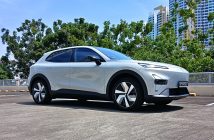
Yet despite all the boardroom drama, Proton’s original mission hasn’t changed: delivering high-quality cars at competitive prices. Now, with the backing of Geely’s electric car (EV) expertise, Proton is entering a new electric era with its first full EV: the Proton e.MAS 7, based on the Geely EX5.

Photo © Calixto Tay
The e.MAS 7 also marks Proton’s return to Singapore after more than a decade, and after test-driving it, we can confidently say — it’s cheaper (well, caveat, depending on today’s COE prices), better, and faster than ever before.
It’s Cheaper
It might seem a little odd to start a car review by talking about the price, but the price point is actually one of this car’s best features. In fact, it perfectly sets the stage for my next two points: this is not only one of the better cars you can buy at this price, it’s also the fastest.
Now, let us put things into perspective with the current COE madness. If you’re reading this sometime in the distant year of 203X — when, hopefully, COE prices have come back down to sane, pre-inflation levels — please forgive me for calling a S$175,988 car (as of 1 October 2025) “cheap.”

Photo © Calixto Tay
Putting things in the context of today’s market, even the long-standing budget darling, the Honda Jazz Hybrid, costs S$183,999. That’s a full S$8,011 more than the Proton e.MAS 7. So, by 2025 standards, the Proton e.MAS 7 is what passes for affordable. And it offers so much more than other “cheap” cars.
It’s Better
If you come into this expecting a budget EV, you’re in for a pleasant surprise. The Proton e.MAS 7 feels remarkably well built and well thought-out, punching above its class in nearly every aspect.
The first thing that stands out is the interior quality. The cabin feels solidly put together, with soft-touch materials used generously in all the right places — across the dashboard, armrests, and door panels — while the harder plastics are tucked neatly out of sight, down where your hands rarely go.
Check out this short ASMR video showcasing the satisfying sounds of the materials, knobs, and switches in the e.MAS 7 and experience its cabin quality for yourself. The cabin quality truly elevates the sense of refinement, so you never once feel like you’re sitting in an entry-level car.
Talking about cabin layout, it is clean, modern and intuitive, anchored with a high-resolution infotainment display that’s both responsive and crisp. It’s paired with a full suite of safety and driver-assistance features that rival what Geely offers on its more premium models — including adaptive cruise control, lane-keeping assist, and blind spot monitoring — all of which work seamlessly in everyday driving.

Photo © Calixto Tay
Centrally placed within easy reach of the driver is a large multifunction knob that feels both intuitive and satisfying to use. It lets you control everything from media volume to fan speed, and you can even personalise its function — just long-press the knob and choose from a list of available settings to make it your own.

Photo © Calixto Tay
And then there are the Flyme speakers — 16 in fact. The sound system is easily one of the biggest surprises in the e.MAS 7. Tuned by Flyme Sound, the in-car audio system punches well above expectations for this price bracket. The soundstage is impressively wide, vocals are clear and centred, and there’s a satisfying richness in the bass that fills the cabin without ever feeling boomy.

Photo © Calixto Tay
Beyond its materials and technology, the e.MAS 7 truly shines as a better family car.
The seats are generously cushioned and supportive, while the rear seats offer two reclining positions for extra comfort. During our tests, both family members and colleagues preferred the more reclined setting, calling it one of the most comfortable rear seats they’ve ever experienced.

Photo © Calixto Tay
The small details show real thought — from sliding drawers cleverly tucked under the centre armrest to a much larger drawer beneath the rear seats.
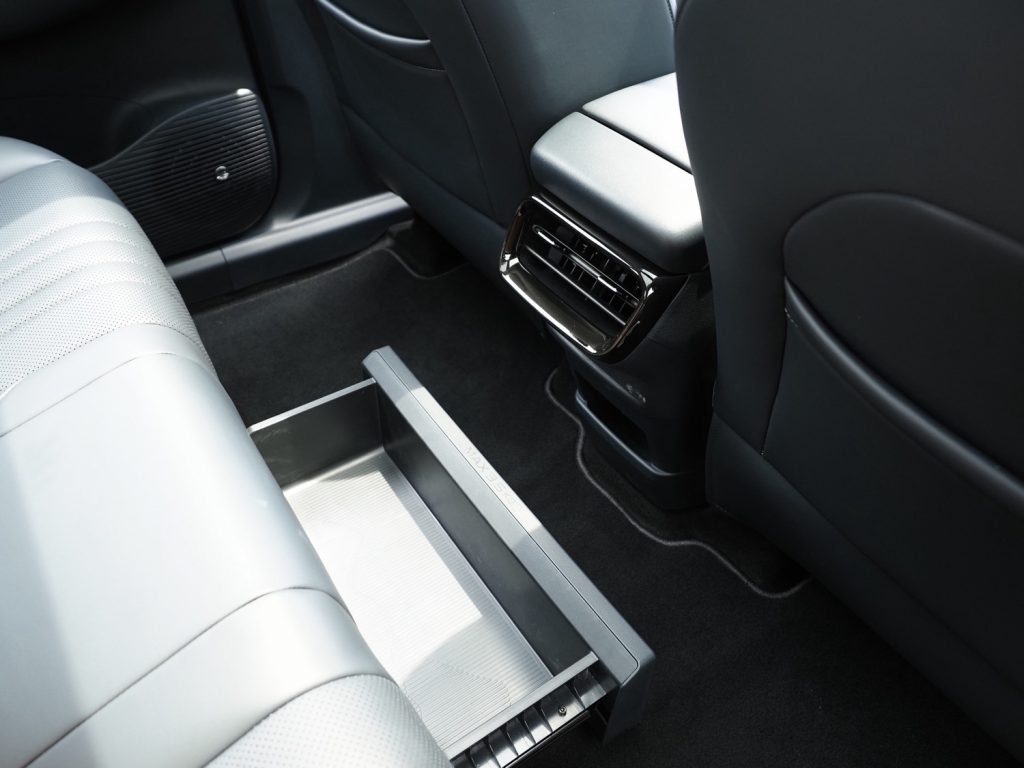
Photo © Calixto Tay
Rear passengers also get their fair share of pampering, with adjustable aircon vents, USB-C and USB-A charging ports, and an expansive panoramic sunroof that floods the cabin with light and adds to the car’s airy, open feel. It’s practical luxury done right.
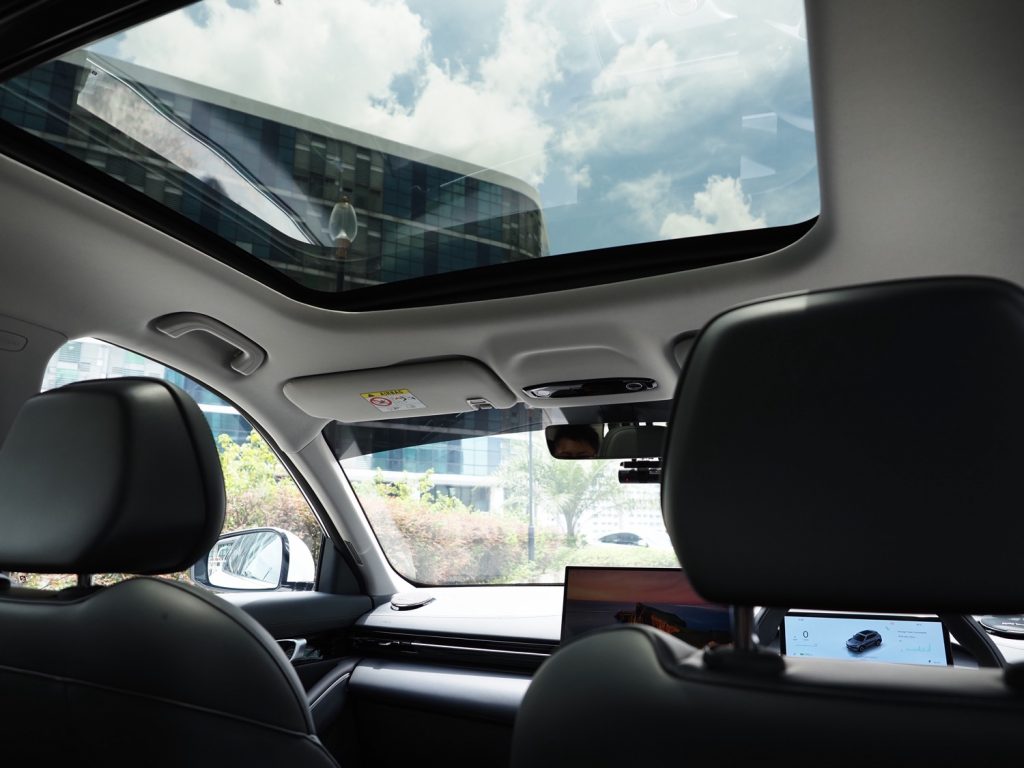
Photo © Calixto Tay
Boot space is ample, and there’s a deep underfloor compartment that swallows up charging cables, groceries, or even a week’s worth of grocery shopping.
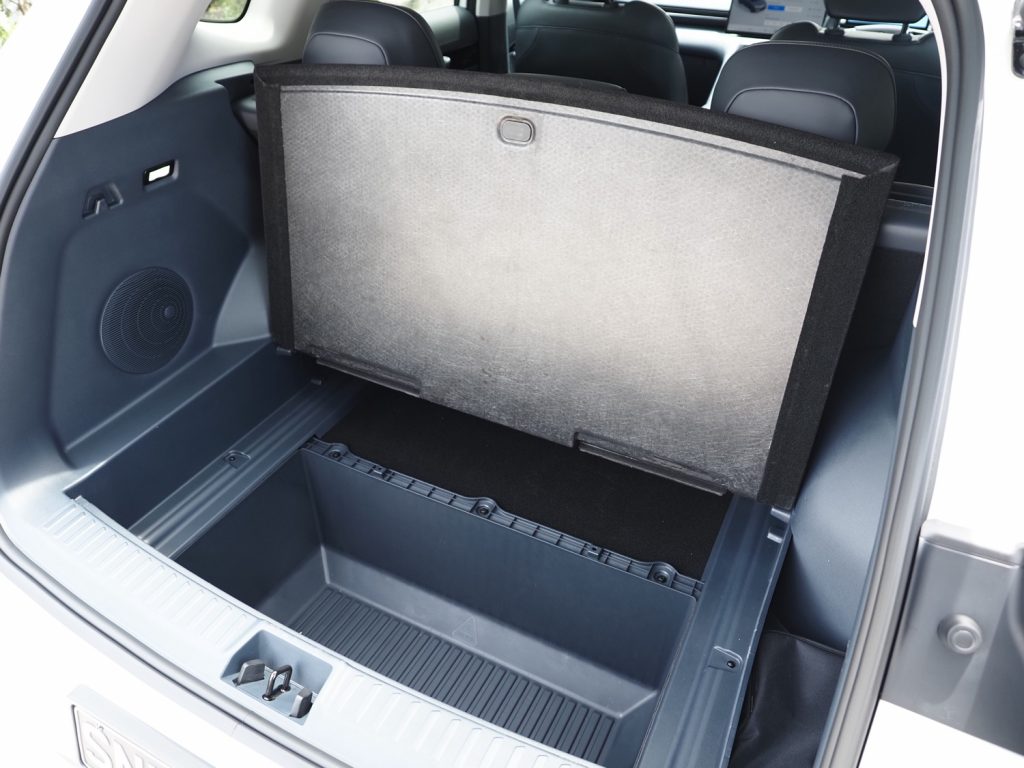
Photo © Calixto Tay
And then there’s how it drives. After all, what’s the point of having an interior that punches way above its price class if the car doesn’t drive or ride well, right?
We’re happy to report that the e.MAS 7 delivers once again. It feels properly quick, with instant torque that actually makes city traffic, dare we say, fun. Switch it into Comfort mode, tone down the regenerative braking, and the car transforms into a wonderfully calm cruiser. Everything flows smoothly — throttle response, braking, and steering — making it an easy, relaxing companion for daily commutes.
The suspension tuning deserves special mention. It soaks up bumps and imperfections with composure, keeping both front and rear passengers comfortable.
Just bear in mind, though, that this isn’t meant to be a performance machine. Push it too hard into a corner, and that comfort-tuned suspension will gently remind you of its priorities — with a bit of wiggle, a touch of roll, and a playful shake of its hips in protest.
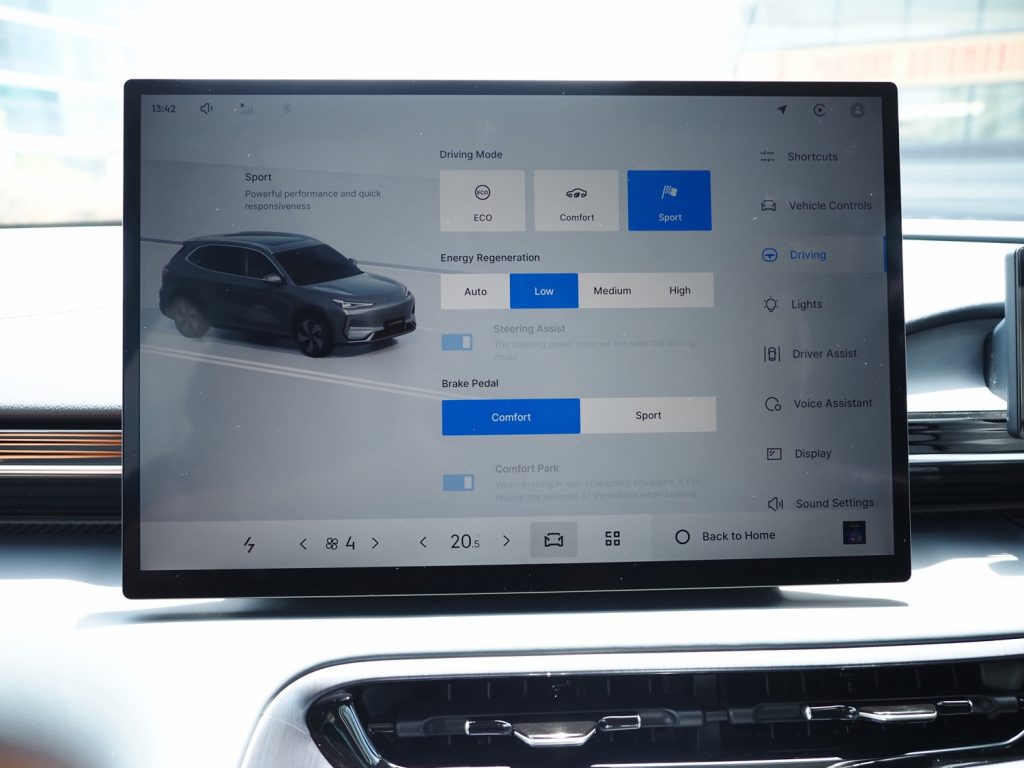
Photo © Calixto Tay
Being an EV, performance isn’t just about how it drives — it’s also about what’s under the floor. The Proton e.MAS 7 uses Geely’s Aegis short-blade LFP battery technology, available in two configurations. The Prime variant gets a 49.52 kWh battery with a WLTP range of around 345 km, while the Premium version steps up to a 60.22 kWh pack capable of around 410 km on a single charge.
In real-world conditions, many drivers are reporting efficiency figures of around 13.8 kWh/100 km, which is better than the official rating. DC fast charging supports speeds of up to 100 kW, allowing the battery to go from 30% to 80% in roughly 20 minutes — quick enough for a coffee break. Power comes from a 160 kW (215 bhp) motor producing 320 Nm of torque, and together, the setup delivers strong, effortless acceleration and confidence on the highway.
All told, the e.MAS 7 feels like a properly sorted EV — one that balances refinement, comfort and performance with surprising maturity. It’s a sign that Proton, now backed by Geely’s engineering prowess, is now better in more ways than one.
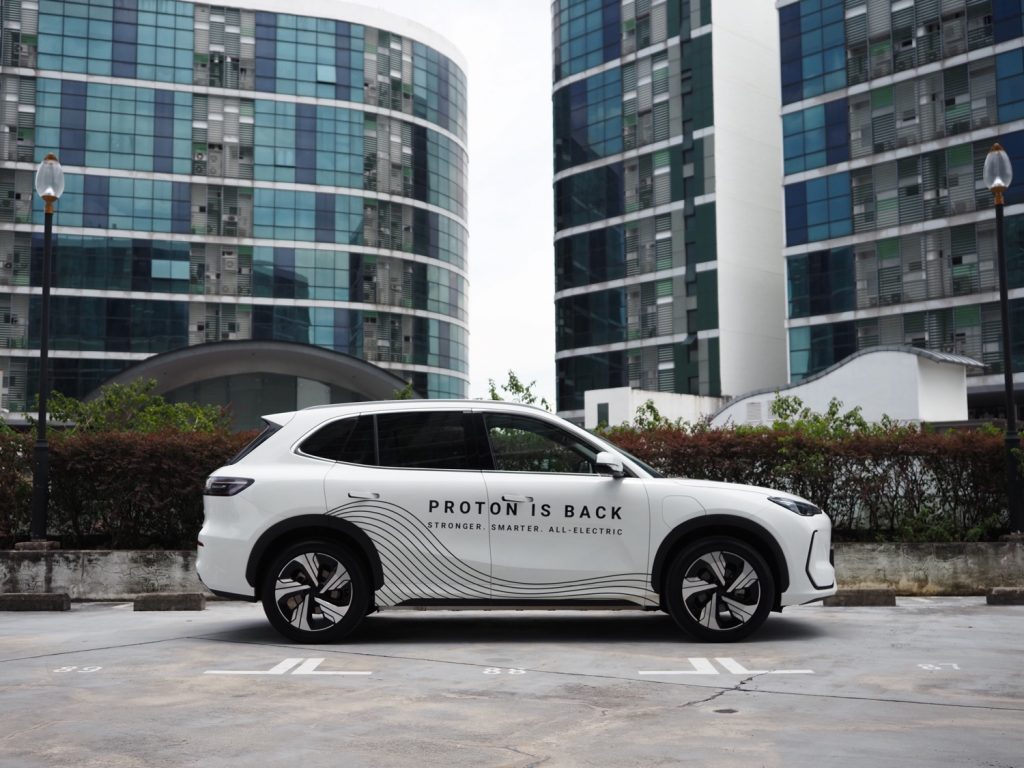
Photo © Calixto Tay
It’s Faster (actually, the fastest)
As of 1st October 2025, under S$190,000, there are only three Category B EVs you can realistically consider — the Proton e.MAS 7, Volkswagen ID.3 Electric, and Volkswagen ID.4 Electric. And interestingly, the Proton quietly takes the crown for performance.
With 215 bhp, the e.MAS 7 packs a noticeable punch over the Volkswagens, both of which put out 201 bhp. That difference shows up the moment you floor it — the e.MAS 7 Prime clocks 0–100 km/h in 6.9 seconds, while the ID.3 needs 7.3 seconds and the larger ID.4 trails further behind at 8.8 seconds.
Cheaper, Better, Faster
In other words, Proton’s first EV isn’t just cheaper or better; it’s also the fastest car you can buy in Singapore at this price. Not bad for a brand that once gave us the humble Saga.
So, who says something can’t be cheap, better, and faster all at the same time? The Proton e.MAS 7 proves otherwise — and for that reason alone, it deserves a serious spot on your shortlist.
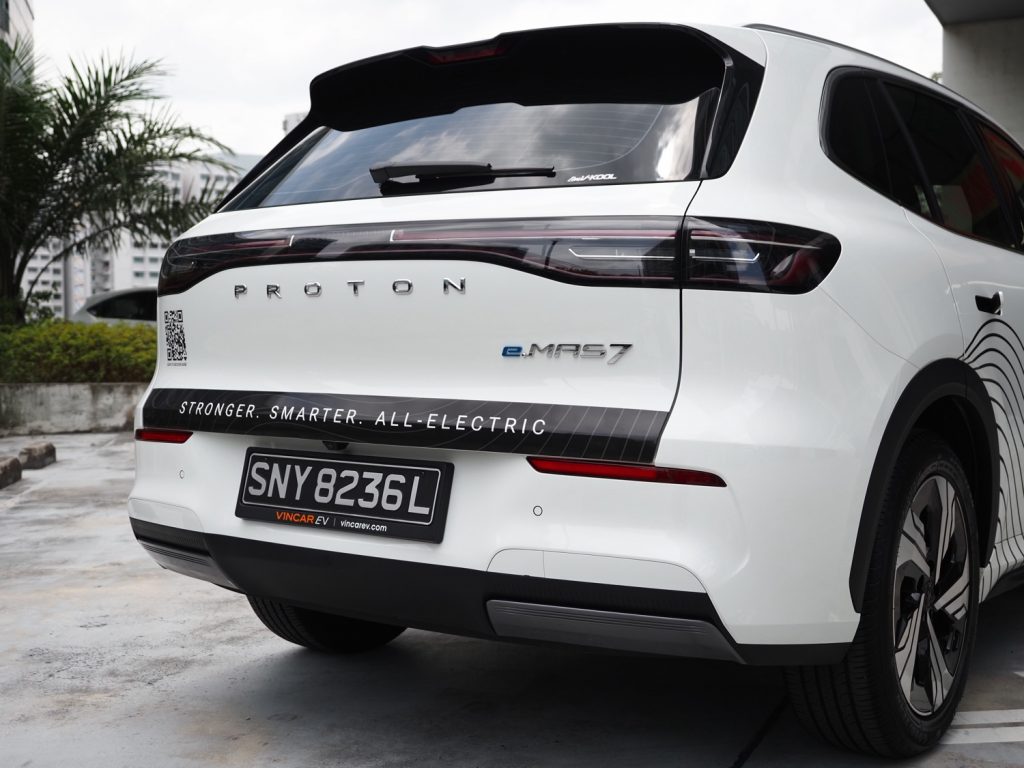
Photo © Calixto Tay
What’s to like
|
What’s holding it back
|
Key Figures
| Battery Capacity | Aegis short-blade LFP battery
Prime: 49.52 kWh Premium: 60.22 kWh |
| Range (WLTP) | Prime: 345 k,
Premium: 410 km |
| Torque | 320 Nm |
| Power | 160 kW (215bhp)
Prime: 6.9s (0-100km/h) Premium: 7.1s (0-100km/h) |
| Boot Space | 461 L |
| Price (with COE) | Prime: S$ 175,988
Premium: S$ 179,988 (October 2025) |
Experience the Proton e.MAS 7 for yourself at Proton e.MAS Singapore today.
Editor’s Note: The Proton e.MAS 7 reviewed was provided as a media review car by Proton e.MAS Singapore. This is not a sponsored post and all opinions are the writer’s own.