

Who says electric vehicles (EVs) are boring? While many EVs do take the form of fairly mainstream family-focused SUVs, there are also some fairly interesting ones out there that offer something a bit different.
The recently launched Nio Firefly is a perfect example, being a small electric hatchback that’s targeted at youthful urban drivers seeking something unique. It’s not a car for everyone, but if you want an EV that stands out with individualistic flair, the Firefly is something worth looking at.
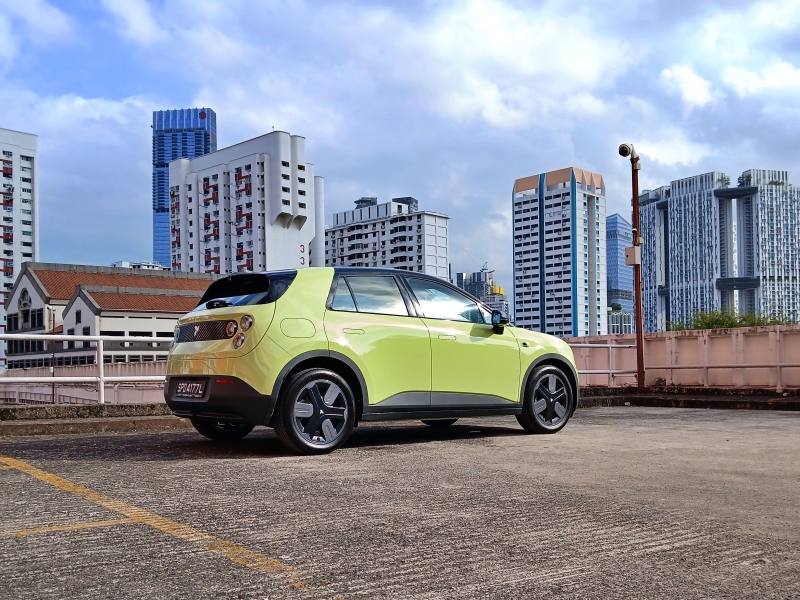
For starters, it features a rather cheeky design that definitely helps it stand out from the crowd. The headlights are formed by three circular lens set in a triangular pattern. Some have remarked that it resembles the camera lens set up of the latest iPhone models, but it is certainly distinctive nonetheless.

The same pattern is repeated for the taillights too, and whichever way you look at it, the Firefly is a car that’s easily recognisable on the roads because of it. The test car’s shade of bright yellow (which Nio oddly calls ‘Lime’) further aids towards that cause too, and you can also have it in other fancy colours like pastel purple (‘Lavender’) or metallic gold (‘Sand’).
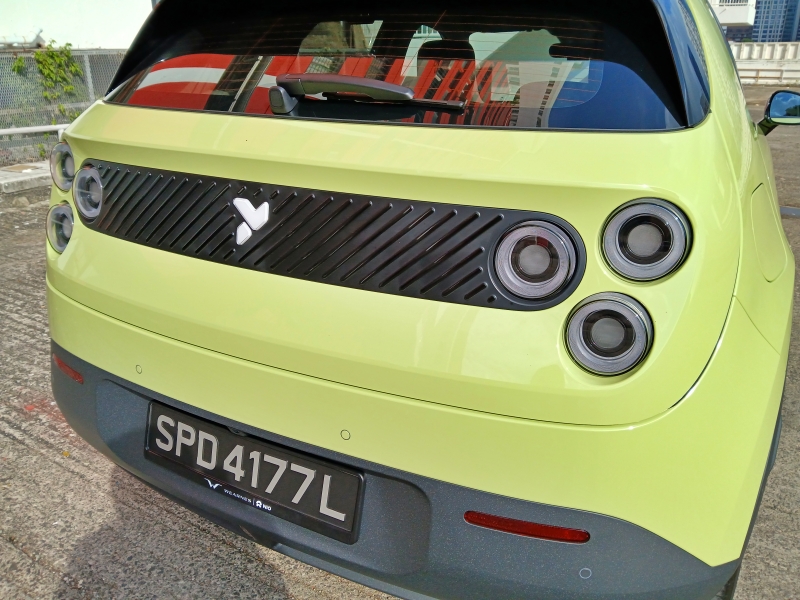
Step inside and you’ll be greeted with a minimalist style that many Chinese EV brands have adopted, with just a 13.2-inch touchscreen to greet you, and not much else. Physical buttons and switches are kept to a minimum, and most of the functions are accessed through the touchscreen.
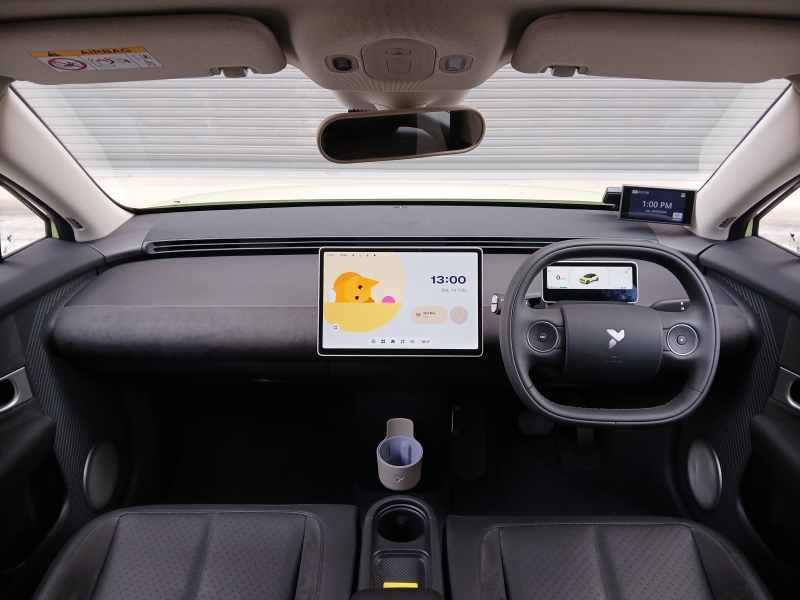
To be fair, the infotainment software is somewhat more user-friendly than many other systems from fellow Chinese EVs. The interface is fairly intuitive, and navigating around it is a fairly simple and straightforward affair.
At the same time, it also manages to throw in a bit of character, with its cutesy graphics highlighted through its colourful rounded theme. There are two animal characters residing within, Milo the car and Xiaobi the dog, whose presence here is mainly to liven up the user experience.

The Firefly is not the first to employ such whimsical tactics of course. We’ve seen this before on cars like the new Mini Cooper, and fellow Chinese small EVs like the Smart #1 and Dongfeng Box also use cheeky graphics to attract attention. In a world where cars are becoming increasingly seen as sterile and clinical, it’s always nice to see some cars retain a sense of fun.
That said, the Firefly does fall short in a few practical areas however. Charging your phone is via two USB ports hidden in the central storage compartment under the front armrest, and there is no wireless charger, a surprising omission in today’s day and age, although apparently Nio are looking to address that on their later shipment of cars.

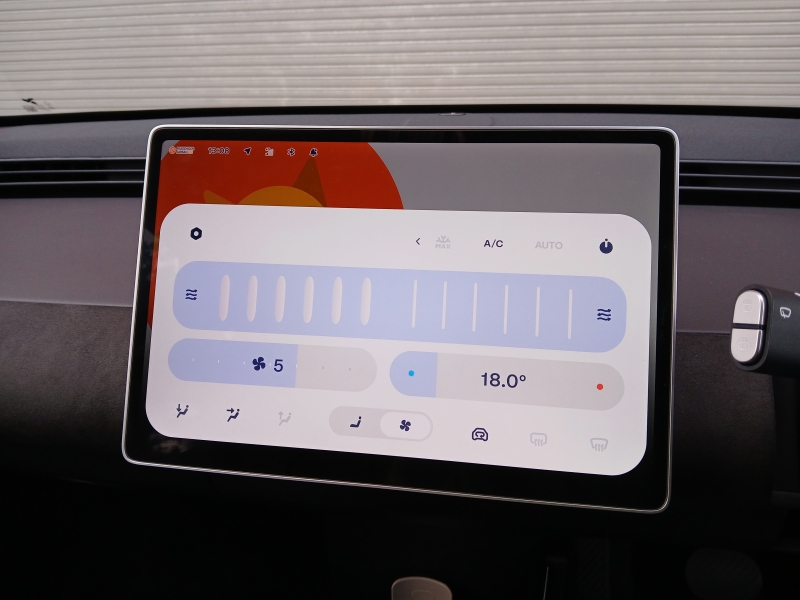
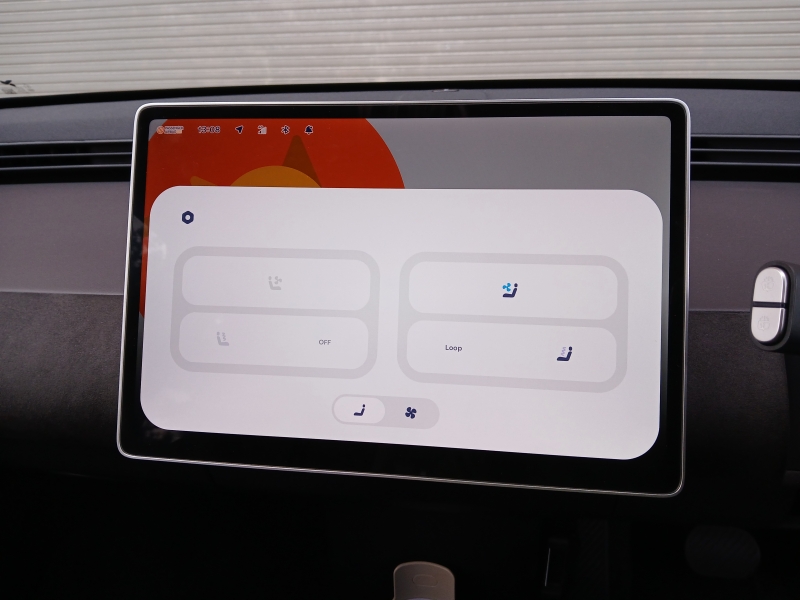
The air con vents are also only adjustable via the touchscreen, which can be a touch annoying. The air flow does feel fairly limited throughout the cabin as well, and with no rear air con vents, the interior can feel somewhat stuffy on hot days.
It makes the large glass roof rather superfluous in fact. It doesn’t even come with an integrated sunshade, but rather a manually-fitted shade that Nio provided which feels extremely cumbersome to remove, so you might as well just leave it in place.

It does fare better in terms of standard equipment though, especially given its position as a budget-priced Cat A EV. You get ventilated and massage seats up front, which is a rarity in this class, as well as a 14-speaker Dolby Atmos sound system which is pretty impressive.
The Firefly also impresses with its nifty storage solutions. The removable cupholder on the centre console is quite cool, as is the hidden storage section under the rear seats, which might be handy for holding small and loose items.

The boot space of 404 litres is pretty decent for a car of its size too, and you can expand it to 1,253 litres if you fold the rear seats down. If you need even more space, the frunk offers 92 litres of capacity, and is shaped well enough to fit a small cabin-sized luggage bag.

While the Firefly has plenty of space for stuff, the same can’t really be said for people. Space is a bit tight for four adults, given its relatively short wheelbase, but it’s not something especially surprising anyway considering its size.

It does compensate with the fully flat floor up front however, which allows you to slide from the driver’s seat to the passenger seat, and vice versa. It also enhances the sensation of space, allowing you to stretch your legs out if you desire.

Despite its modest output of 141bhp, the Firefly does feel pretty zippy on the move. The 205Nm of torque does help with giving it some zesty acceleration off the line, but the power delivery also feels more natural and progressive compared to many other Cat A EVs on the market.
It could be down to the fact that the Firefly was engineered with such an output from the factory, instead of being artificially tuned down as is the case with the majority of the Cat A EVs in Singapore. As a result you don’t quite get the sense of the power being restrained as tends to happen with those other cars.

Having said that, this is not a car that enjoys being driven fast over a sustained period. It tends to get unsettled at triple digit speeds, which is a little unnerving, though it does serve as a reminder for you to ease off the throttle before you get into legal trouble.

It could be partly down to the Giti Synergy H2 tyres, which on the test car seems to have experienced a fair amount of wear, and therefore feels less grippy as I would have liked. This is evidenced by the car’s tendency to understeer under hard cornering, but truthfully, your experience might vary if the car is outfitted with a different set of tyres.

It is a pity, because you get the sense that the underlying chassis of the Firefly offers plenty of potential. The rear-wheel-drive setup and short wheelbase means that, under the right conditions, the car feels remarkably nimble and competent in the corners. Throw on a set of decent rubber and the Firefly would probably be quite delightful to drive.
An underrated trait too is the car’s turning circle, which stands at a tiny 4.75 metres. It turns the Firefly into a highly manoeuvrable little creature, and makes U-turning and parking an absolute piece of cake.

Something else that’s small on the Firefly though is the 42kWh battery, which translates into a claimed range of just 320km on a full charge. While it’s probably good enough for about a week’s worth of driving for the average Singaporean, most new EVs offer a minimum of 400km of range these days.

That said, the small battery means that it charges up pretty quickly too, and you can get a full battery after around an hour at a fast charger. More interestingly, the Firefly is designed to be compatible with Nio’s battery swapping technology, which minimises the inconvenience of the short range, although that technology is not available in Singapore just as yet.

What the Firefly offers though is a dose of personality for those looking for an EV with a difference. It’s not for everybody, but its unique style and peppy energy does inject a plenty of zest into the EV driving experience. If that’s what you seek, then it’s worth checking out this lively little fly.