Managing facial wrinkles is a lot like optimising a complex user interface. When fine horizontal lines start appearing across your upper face, your initial instinct is to freeze the entire surface area as fast as possible to smooth out the skin.
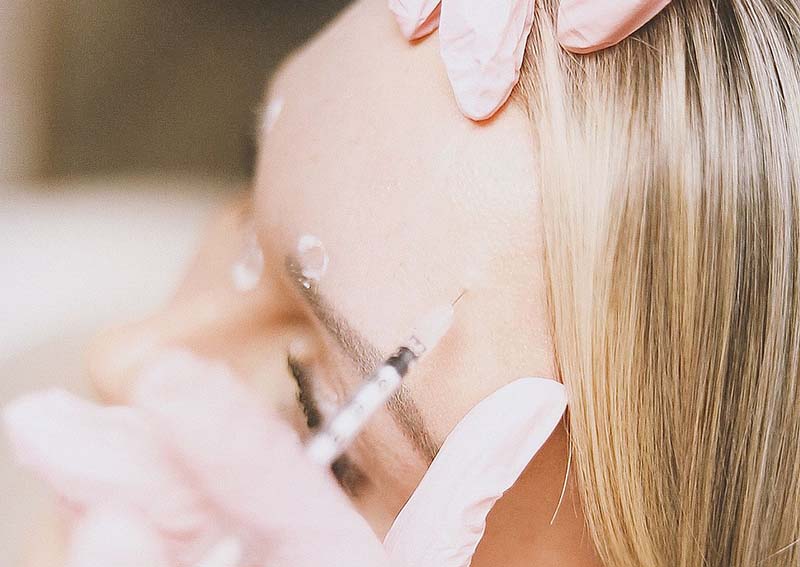
The challenge is that your upper face relies on a delicate balance between opposing muscle groups. If you are assessing dynamic smoothing, exploring how Botox for the forehead treatments balance muscle elevator forces helps you avoid a heavy, hooded brow. Taking a measured approach to neuromodulator dosing preserves natural facial movement while softening deep expression lines.
The Physics of Opposing Facial Muscles
Your upper face operates on a simple pulley system governed by two conflicting muscle groups. The large frontalis muscle covers your forehead and acts as the single elevator muscle, pulling your eyebrows upward whenever you express surprise.
Working against the frontalis are your depressor muscles, including the corrugator and procerus muscles between your eyes. These depressor muscles pull your eyebrows downward and inward when you frown. When these opposing forces pull evenly, your eyebrows rest in a neutral, open position over your eye sockets.
The Isolated Forehead Treatment Mistake
The most common and expensive mistake people make is asking to treat horizontal forehead lines while completely ignoring their frown lines. People make this error because they assume treating a single isolated zone is a budget-friendly way to test neuromodulators.
In reality, weakening the frontalis muscle while leaving your depressors at full strength disrupts your facial mechanical balance. Without the frontalis pulling upward to counter the frown muscles, your eyebrows drop downward, creating a heavy, tired appearance. Fixing this unexpected brow drop requires paying for extra balancing injections or waiting twelve uncomfortable weeks for the treatment to wear off.
The Smoothness versus Height Trade Off
Standard beauty guides often promise that you can achieve completely frozen, line-free skin without changing your eyebrow height. The non-obvious trade-off is that total line erasure requires fully immobilising the frontalis, which guarantees a slight downward shift in brow position.
If you insist on zero movement in your upper face, you trade youthful eyebrow height for flat surface texture. Allowing ten to twenty percent micro-movement in the lower frontalis preserves your natural eyebrow arch while still softening deep horizontal creases. The goal is reducing muscle over-activity rather than completely shutting down your facial expression mechanics.
Balancing Units Across Facial Zones
Let us look at a concrete worked example comparing an isolated forehead injection against a balanced two-zone protocol. Consider a thirty-eight-year-old patient who receives twenty units of neuromodulator injected exclusively into the frontalis muscle to erase horizontal lines.
That isolated approach costs roughly 240 pounds but causes a two-millimetre brow drop, creating heavy eyelids that last for three months. In contrast, a balanced protocol uses ten units in the frontalis paired with twenty units in the glabella frown complex, costing 360 pounds total. Spending the extra 120 pounds balances the elevator and depressor forces, smoothing horizontal lines while maintaining natural eyebrow height for sixteen full weeks.
Protocols for Balanced Muscle Rejuvenation
Achieving natural results across your upper face requires setting up precise operational guidelines with your clinician. Treating your aesthetic care like a measured framework prevents over-dosing fragile muscle tissue.
Keep these core operational guidelines in mind:
- Incorporate glabella support: Always treat the frown muscle complex whenever injecting the forehead to prevent uncountered downward brow pull.
- Respect the safety zone: Keep all injection points at least two centimetres above the brow bone to protect the lower muscle fibers that hold up your eyelids.
- Prioritise conservative dosing: Start with lower unit doses during your initial session and evaluate the results after fourteen days before adding extra units.
A Simple Test for Brow Droop Risk
You do not need clinical training to evaluate whether high-dose forehead treatments carry a risk of heavy eyelids for you. You can apply a straightforward decision rule using a basic mirror test at home.
Look into a mirror and completely relax your facial muscles, ensuring you are not holding your forehead up. If your eyebrows drop noticeably or your upper eyelids feel heavy when you stop consciously lifting your frontalis, you rely on that muscle to keep your eyes open. In this scenario, avoid high-dose forehead injections and focus primarily on treating your frown lines to lift the brow naturally.
Rejuvenating your upper face is ultimately about managing structural mechanics rather than freezing every line you see. By balancing elevator and depressor muscles, accepting subtle movement for natural brow height, and testing your baseline lid position, you protect both your expression and your appearance. Approach your treatment plan with calm strategy, focus on muscle harmony, and move forward with quiet confidence in your personal care decisions.